November 4, 2026
La Beneficència Valencia: Prehistory Museum, L’ETNO and Building History
Architecture, Culture, History
Top attractions:
About La Beneficència
La Beneficència Cultural Centre (Centro Cultural La Beneficencia; Centre Cultural La Beneficència in Valencian) is a 19th-century charity house on Carrer Corona that now holds two free museums run by the Diputació de València: the Museum of Prehistory of Valencia (Museo de Prehistoria de Valencia; Museu de Prehistòria de València), known as MuPreVa, and L’ETNO, the Valencian Museum of Ethnology (Museo Valenciano de Etnología; L’ETNO. Museu Valencià d’Etnologia). The complex sits on the western edge of El Carmen in Ciutat Vella, a short walk from the Quart Towers (Torres de Quart). One visit takes in Ice Age art, Iberian bronzes, a neo-Byzantine church and a museum on what it means to be Valencian. L’ETNO was named European Museum of the Year in 2023.
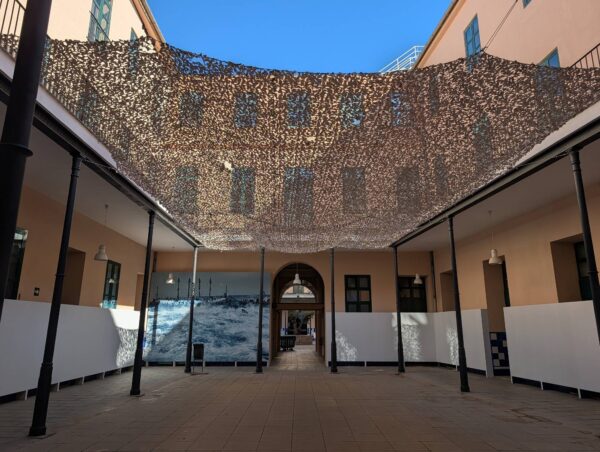
Arcaded patio, Centre Cultural La Beneficència. Photo by Alis Monte [CC BY-SA 4.0], via Connecting Valencia
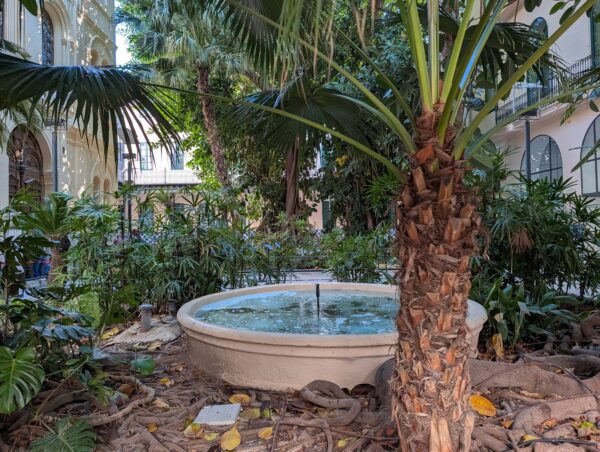
Palm courtyard garden, La Beneficència. Photo by Alis Monte [CC BY-SA 4.0], via Connecting Valencia
History of the building
The site began as a convent: the official history dates it to 1520 as an Augustinian house. Franciscans later occupied it under the devotion of the Crown of Thorns, which gave Carrer Corona its name. After the Mendizábal disentailment of 1835 freed church property, the Casa de Beneficencia moved into the old convent and its orchard in 1840–41, on the initiative of the Diputación. The charity itself dated from 1817 under Captain-General Javier Elío, with its effective foundation in 1826, when the collapse of the silk industry left the city full of beggars. In the new building it became above all an orphanage, taking girls and boys aged 7 to 13, a role it kept until 1981.
In 1873 Joaquín María Belda Ibáñez enlarged and reorganised the complex along the hygienist lines of the day: a run of blocks around eight patios with brick dados, a textbook hospice plan. Its centrepiece, the Beneficència Church (Iglesia de la Beneficencia; Església de la Beneficència), followed in 1882–83 in neo-Byzantine style, with a flat ceiling on an iron frame, an iron dome with coloured glass, and walls and ceiling painted by Antonio Cortina to imitate mosaics. The patio gardens and the two fountains of the main patio belong to the same period.
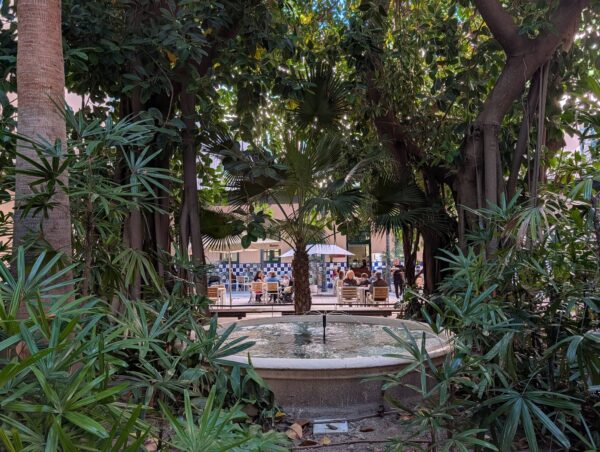
Garden path and fountain, La Beneficència. Photo by Alis Monte [CC BY-SA 4.0], via Connecting Valencia
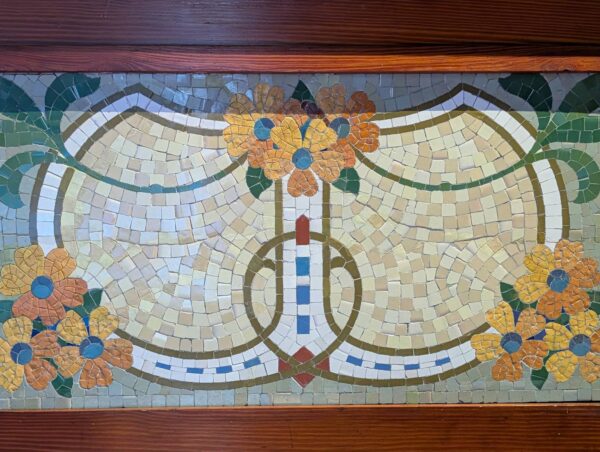
Tile mosaic, La Beneficència. Photo by Alis Monte [CC BY-SA 4.0], via Connecting Valencia
The Diputació restored the building in the early 1990s under architects Rafael Rivera and Mateo Signes, with patio tilework designed by the painter Carmen Calvo, and it opened as a cultural centre in 1995. For the wider story of the city, read our history of Valencia.
What is inside
Two museums are open to visitors, each with permanent and temporary halls:
- Museum of Prehistory of Valencia (MuPreVa): archaeology from the Lower Palaeolithic to the Visigothic period.
- L’ETNO: Valencian ethnology, from the city to the inland mountains.
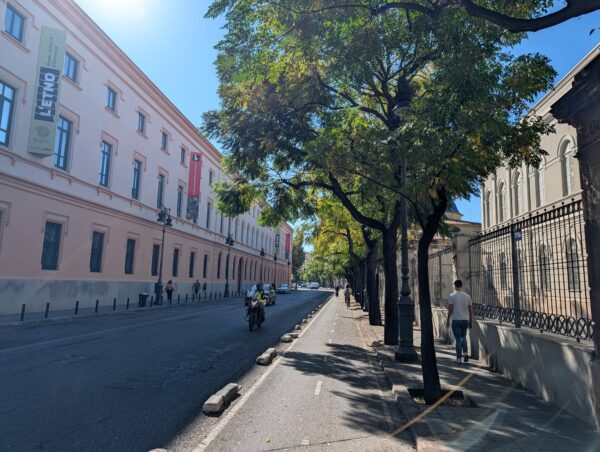
L’ETNO façade banner at La Beneficència. Photo by Alis Monte [CC BY-SA 4.0], via Connecting Valencia
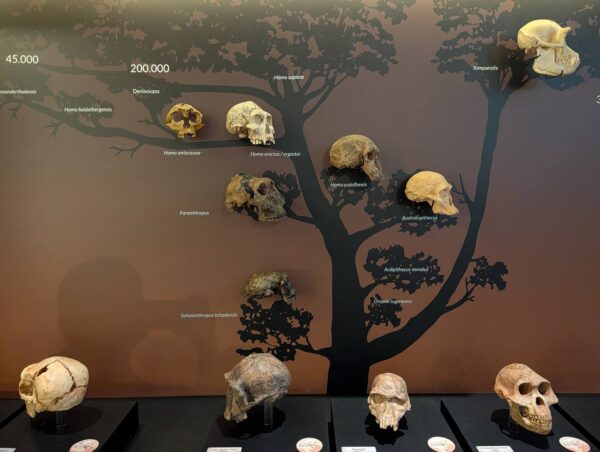
Hominid skull display, MuPreVa. Photo by Alis Monte [CC BY-SA 4.0], via Connecting Valencia
The building also houses the Prehistoric Research Service (Servicio de Investigación Prehistórica; Servei d’Investigació Prehistòrica, SIP), whose library is open on weekdays, and offices of the Institució Alfons el Magnànim and other Diputació cultural services. The church now serves as the assembly hall and is used for events.
Museum of Prehistory of Valencia
The Diputació founded the SIP and its museum together in 1927, and the collections come from the service’s own excavations across the province since then. The permanent route runs in strict chronological order over two floors, from the first stone tools to the end of antiquity.
First floor (rooms 1–10): after an introduction to Valencian archaeology, the route opens with the Lower and Middle Palaeolithic and the first inhabitants, then the great hunters of the Upper Palaeolithic. Room 4, Palaeolithic art, is built around the engraved and painted plaquettes of Cova del Parpalló (Gandia). The Epipalaeolithic last hunters lead to the Neolithic first farmers and herders, with the impressed pottery of Cova de l’Or (Beniarrés), then post-Palaeolithic rock art, the Eneolithic arrival of metals and the varied cultures of the Bronze Age. Map highlights along the way include a carved deer bone from Cova del Bolumini and pottery from Lloma de Betxí.
Second floor (rooms 1–14): the Mediterranean world sets the scene for the Iberians, a mosaic of peoples. Room 3 is given to the great Iberian town of La Bastida de les Alcusses (Moixent), source of the bronze Warrior of Moixent (Guerrer de Moixent); domestic life, funerary and religious customs, the town of Edeta (Llíria) and its territory, Iberian writing and the first coins follow. Rooms 9–13 trace Romanization, trade, the Roman town, the countryside and funerary rites, with the Font de Mussa mosaic and the bronze Apollo of Pinedo among the highlights. Room 14 closes with the Visigoths.
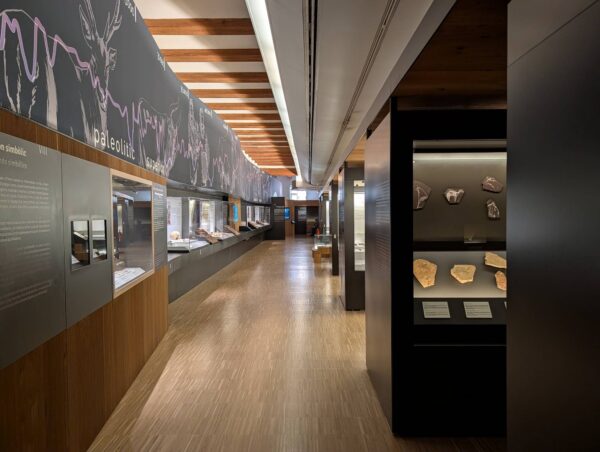
Gallery, MuPreVa. Photo by Alis Monte [CC BY-SA 4.0], via Connecting Valencia
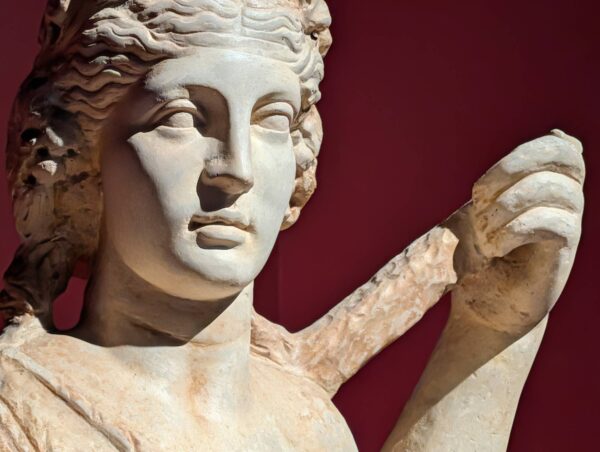
Marble bust, MuPreVa. Photo by Alis Monte [CC BY-SA 4.0], via Connecting Valencia
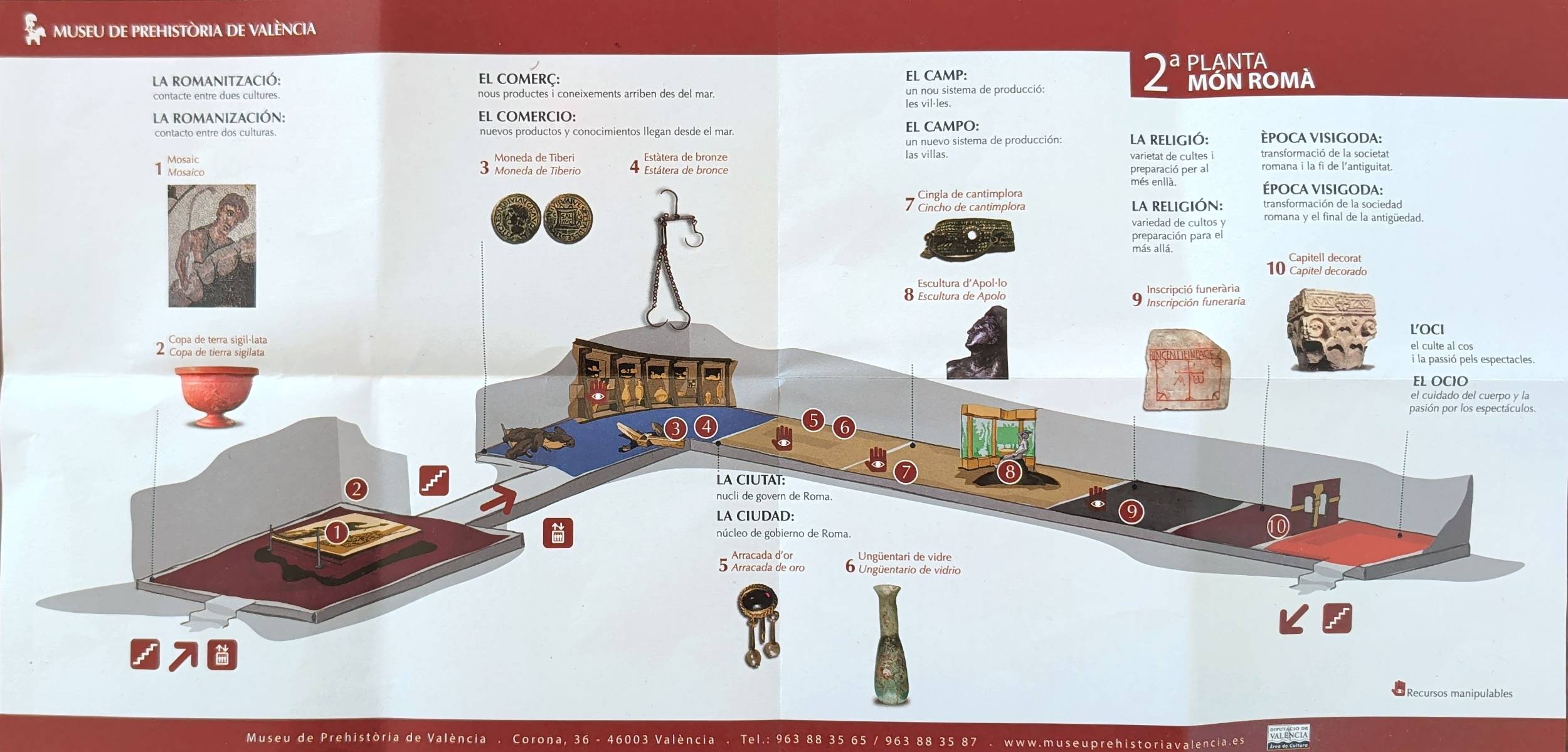
MuPreVa floor plan — 2ª planta, Món Romà. Photo by Alis Monte [CC BY-SA 4.0], via Connecting Valencia
History of Money (Història dels Diners): room 10 on the first floor, opened in 2009, works in three zones: Valencian money; coins, banknotes and more; and beyond money, from a Sagunt silver obol and a gold timbre of Alfons el Magnànim to Kuba textile currency from the Congo and a Chinese mulberry-paper note.
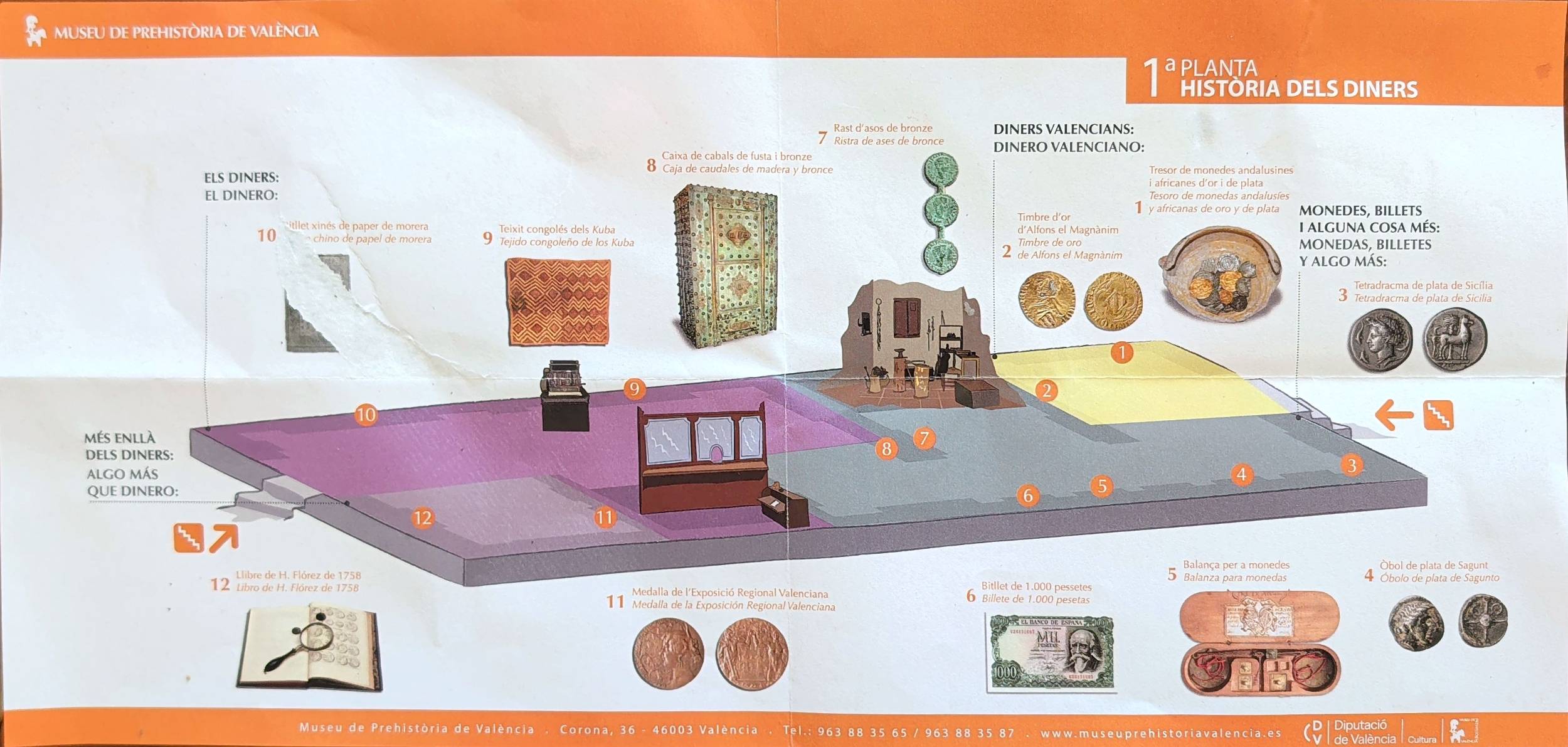
MuPreVa floor plan — 1ª planta, Història dels Diners. Photo by Alis Monte [CC BY-SA 4.0], via Connecting Valencia
The SIP also runs two free open-air sites outside the city, La Bastida de les Alcusses in Moixent and Puntal dels Llops in Olocau. See our day trips from Valencia.
L’ETNO: No és fàcil ser valencià
The museum was created in 1983. Its permanent exhibition, No és fàcil ser valencià (“It isn’t easy being Valencian”), looks at Valencian identity in three sections:
- La Ciutat: global i local: the city and the pull between global and local.
- Horta i Marjal: els imaginaris: the stereotypes built around the huerta and the marshes.
- Secà i Muntanya: les invisibilitats: the dry farmland and mountains of inland Valencia.
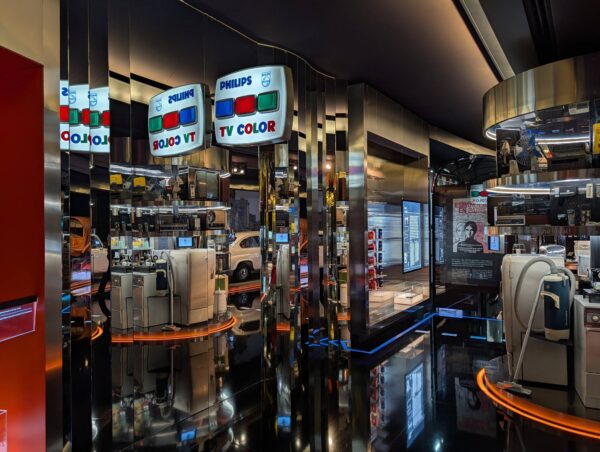
Retro interior, L’ETNO. Photo by Alis Monte [CC BY-SA 4.0], via Connecting Valencia
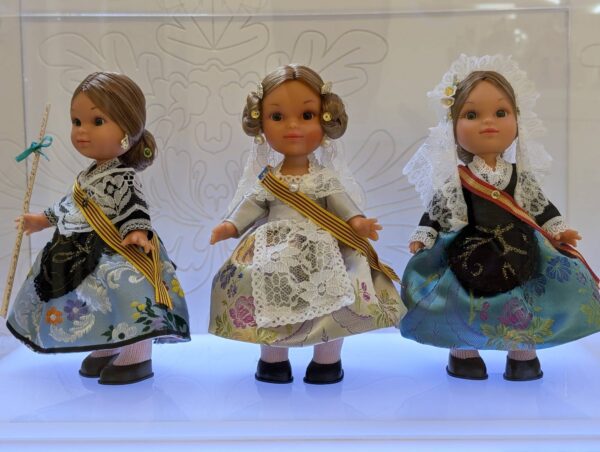
Fallera dolls, L’ETNO. Photo by Alis Monte [CC BY-SA 4.0], via Connecting Valencia
Free guided visits by museum staff cover one section per session and last about 45 minutes; collect a ticket in the lobby. Alternative routes through the collection, Relectures and Etnoviatge, offer other readings.
Temporary exhibitions
Both museums change their temporary halls through the year, and each lists current shows on its home page. At L’ETNO, El viatge de Fantasia: de la paraula al producte, a journey from oral folk tales to merchandise and theme parks, opens in Sala 10 in November 2026 and runs through October 2027. L’ETNO’s long-running show on the city and its garden, Abans del jardí, is not in this building: it is at the NATÚRIA building in the Turia Gardens, open on weekday mornings.
Practical information
- Address: Carrer Corona 36, 46003 València
- Hours: Tuesday to Sunday 10:00–20:00; 24 and 31 December 10:00–14:00
- Closed: Mondays, 1 January, 1 May and 25 December
- Entry: free to both museums
- Phone: 963 883 565 / 963 883 587
- Bags: bags larger than 40×40 cm / 16×16 in go to the cloakroom
- Café and shop: both in the building
- Photos: allowed without flash unless an exhibition says otherwise; no food or drink in the halls
Pair the visit with the Quart Towers and the lanes of El Carmen, or see more ideas in things to do in Valencia.
Frequently asked questions
What is La Beneficència Cultural Centre?
La Beneficència Cultural Centre (Centro Cultural La Beneficencia; Centre Cultural La Beneficència in Valencian) is a 19th-century charity house at Carrer Corona 36, on the western edge of El Carmen in Ciutat Vella, that now holds two free museums run by the Diputació de València: the Museum of Prehistory of Valencia (MuPreVa) and L’ETNO, the Valencian Museum of Ethnology. It also houses the Prehistoric Research Service (SIP), whose library is open on weekdays, and a neo-Byzantine church now used for events.
Is La Beneficència free, and what are the opening hours?
Entry is free to both museums. They open Tuesday to Sunday 10:00–20:00, with 24 and 31 December 10:00–14:00, and close on Mondays, 1 January, 1 May and 25 December.
What can you see in the Museum of Prehistory of Valencia?
MuPreVa runs in strict chronological order over two floors, from the Lower Palaeolithic to the Visigoths. The first floor covers Ice Age hunters to the Bronze Age, with the engraved and painted plaquettes of Cova del Parpalló and the impressed pottery of Cova de l’Or; the second covers the Iberians and Romans, with the bronze Warrior of Moixent (Guerrer de Moixent), the Font de Mussa mosaic and the bronze Apollo of Pinedo. Room 10 on the first floor holds the History of Money (Història dels Diners).
What is L’ETNO about?
L’ETNO, created in 1983 and named European Museum of the Year in 2023, explores Valencian identity in its permanent exhibition No és fàcil ser valencià (“It isn’t easy being Valencian”), in three sections: the city, the huerta and marshes, and the dry farmland and mountains of inland Valencia. Free guided visits by museum staff cover one section per session and last about 45 minutes; collect a ticket in the lobby.
What was the building before it became a cultural centre?
The site began as an Augustinian convent in 1520; Franciscans later held it under the devotion of the Crown of Thorns, which named Carrer Corona. The Casa de Beneficencia moved in after the 1835 disentailment, in 1840–41, and served above all as an orphanage for children aged 7 to 13 until 1981. Enlarged in 1873 around eight patios, with its church added in 1882–83, it was restored in the early 1990s and opened as a cultural centre in 1995.
Is there a café, and are there temporary exhibitions?
A café and a shop are both in the building. Both museums change their temporary halls through the year; at L’ETNO, El viatge de Fantasia: de la paraula al producte opens in Sala 10 in November 2026 and runs through October 2027. Bags larger than 40×40 cm / 16×16 in go to the cloakroom, and photos are allowed without flash unless an exhibition says otherwise.