Top attractions:
About Queen Sofia Palace of Arts
The Queen Sofia Palace of Arts (Palau de les Arts Reina Sofía) is Valencia’s principal opera house and a landmark of contemporary architecture within the City of Arts and Sciences. Designed by Valencian architect Santiago Calatrava, it opened on 8 October 2005 and hosts opera, ballet, zarzuela, and symphonic concerts across four dedicated halls.
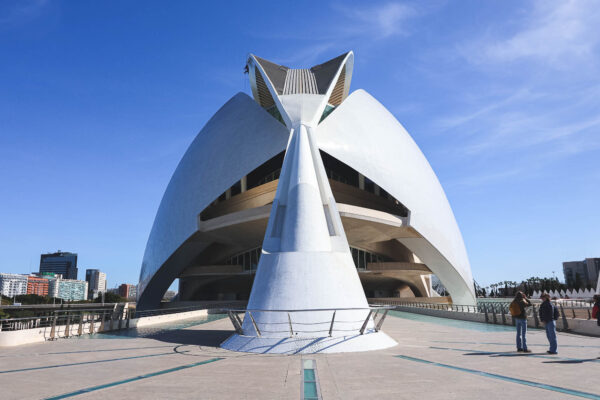
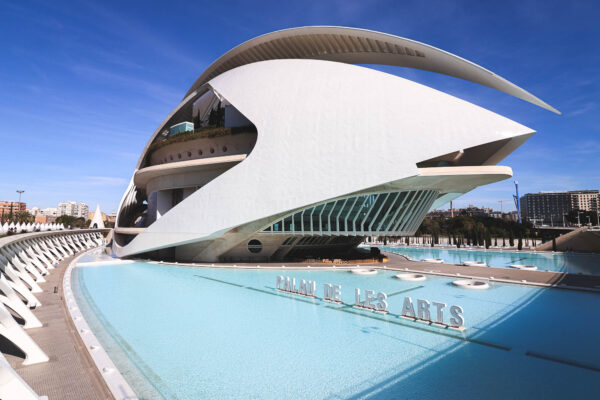
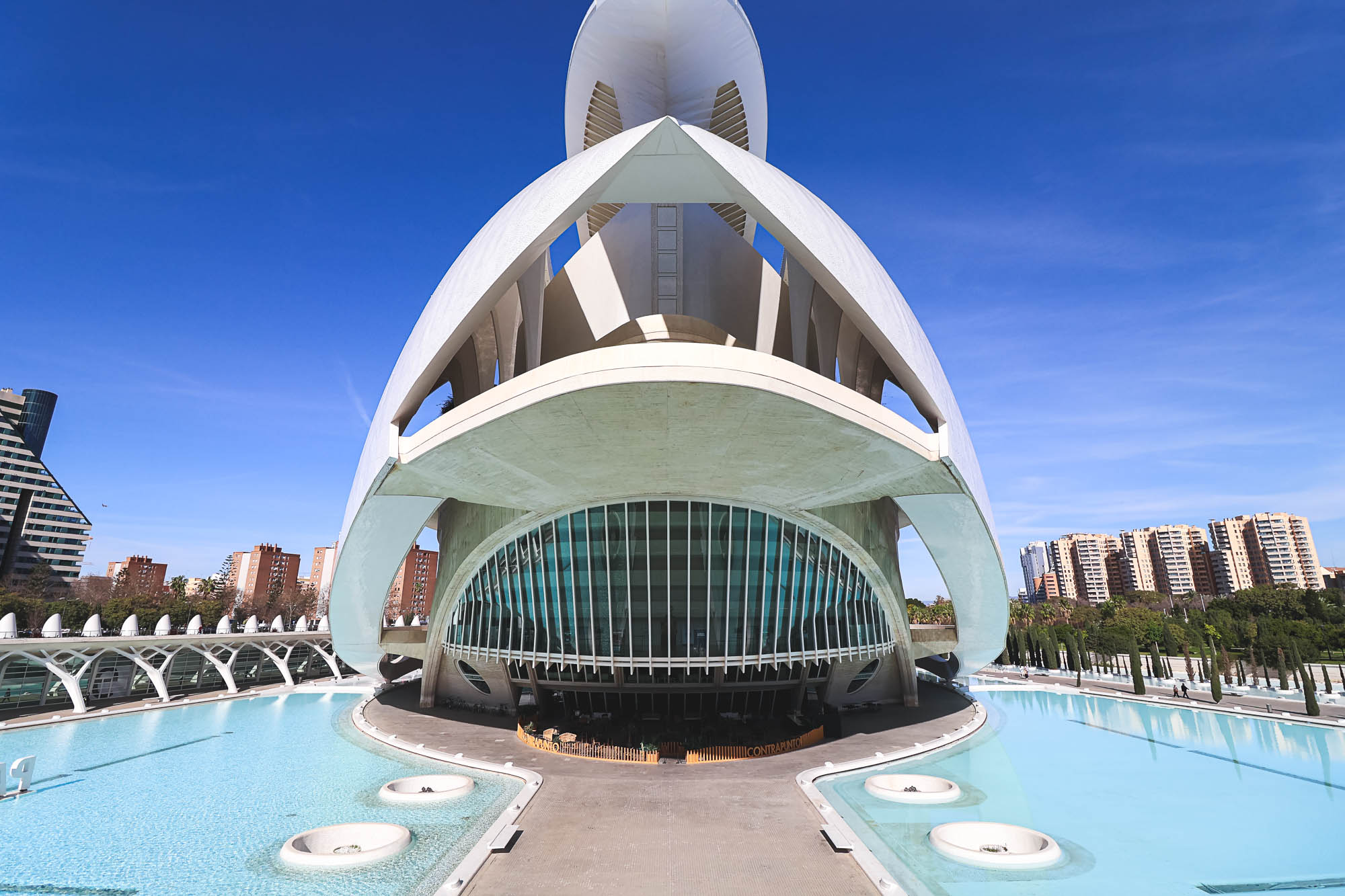
The structure rises 75 m / 246 ft above the former Turia riverbed and spans more than 40,000 m² / 430,000 ft², with 14 levels above ground and 3 below. Its curved steel shell, topped by a distinctive floating feather, is clad in white trencadís mosaic that mirrors the surrounding reflecting pools.
Beyond its striking silhouette, the Palau is a working cultural institution with a resident orchestra and its own choir. The main hall seats around 1,470 and is engineered for world-class acoustics, drawing international conductors, soloists, and touring productions each season.
Queen Sofia Palace of Arts Details
- Location: City of Arts and Sciences, Quatre Carreres
- Region: Valencia, Spain
- Address: Av. del Professor López Piñero, 1, 46013 Valencia, Spain
- Entrance: Main Entrance
- Created: 2005 (21st Century)
- Architectural Style: Neo-Futurism
- Entrance fee: Depends on performance and seat category (as of April 2026).
- Tickets: Available online via the official box office and on site.
- Opening hours: Tue-Sun 10:00-18:00; Mon closed (as of April 2026).
- Transport: Bus lines 13, 15, 25, 95 (Professor López Piñero – Palau de les Arts).
- Accessibility: Fully wheelchair accessible with ramps, elevators, reserved seating, and adapted restrooms.
Location
History & Development
Santiago Calatrava drafted the first sketches of the Palau in the early 1990s as part of the plan to transform the old Turia riverbed into a cultural axis. Construction began in the late 1990s, and the building was inaugurated by Queen Sofía of Spain on 8 October 2005, becoming the final major piece of the City of Arts and Sciences complex.
The opening years were eventful. In December 2006, a stage mechanism failure during a production of Mozart’s Don Giovanni forced the cancellation of several performances. A year later, in November 2007, heavy storms flooded the lower levels and damaged stage machinery, triggering a public dispute between regional authorities and the architect’s studio over design and maintenance responsibilities.
Major repairs and façade works followed throughout the 2010s, including the replacement of detached trencadís tiles. Today the Palau operates four halls, the Sala Principal, Aula Magistral, Auditorium, and Teatro Martín i Soler, and anchors Valencia’s classical music calendar with a full season from autumn to summer.
Highlights
- Sala Principal: The main opera hall with roughly 1,470 seats across four tiers, designed for grand operatic and symphonic productions.
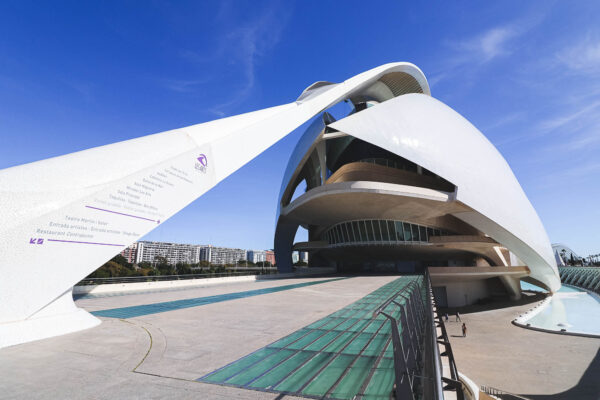
- The Feather Roof: A cantilevered steel shell reaching 75 m / 246 ft high, one of Calatrava’s most recognizable structural gestures.
- Trencadís Mosaic Shell: Over 30,000 m² / 323,000 ft² of broken white ceramic tiles cover the exterior, echoing the work of Antoni Gaudí.
- Guided Architectural Tours: Backstage visits reveal the orchestra pit, rehearsal rooms, and the acoustics of the main hall.
- Resident Orchestra & Choir: Home to the Orquestra de la Comunitat Valenciana, known for its work with conductor Lorin Maazel during its early years.
Why Visit?
For opera and classical music lovers, the Palau is one of Spain’s most important stages outside Madrid and Barcelona. The season features international opera productions, ballet, zarzuela, and symphonic concerts, often with tickets far cheaper than comparable venues in other European capitals.
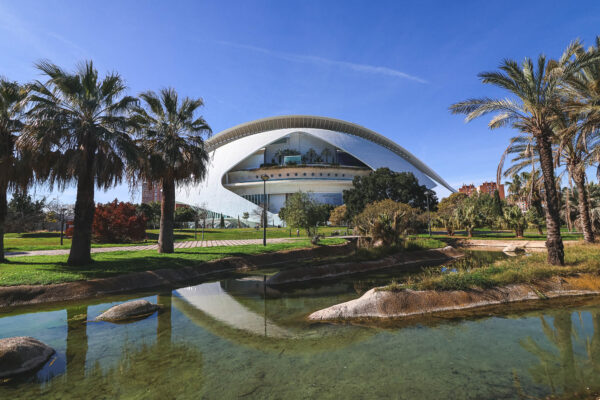
For architecture fans, the building is a destination in its own right. Its sweeping feather roof, mirror pools, and white mosaic skin make it the most photographed piece of the City of Arts and Sciences, especially at sunset and after dark when the façade is lit.
Even without a performance, the Palau pairs well with neighboring attractions like the Principe Felipe Science Museum, L’Hemisferic, and L’Oceanographic. Together they make a full day of futuristic architecture, science, and performing arts.
All photos by Alis Monte. If you want to collaborate, contact me on hi@connectingvalencia.com. Photo by Alis Monte [CC BY-SA 4.0], via Connecting Valencia.
Ticket Discounts
The Palau de les Arts runs its own discount schemes directly through the official box office, including reduced fares for under-30s, students, large families, and last-minute seats on performance days. To pair the visit with other attractions in the complex, you can get the Valencia Tourist Card online for 24, 48, or 72-hour options with a free cancellation policy.
Frequently Asked Questions
Where is it located?
In the vibrant cultural hub of Valencia, Spain, within the City of Arts and Sciences.
When was it opened?
The venue was established in the early 2000s, with public opening around 2005.
Are guided tours available?
Yes, guided tours allow visitors to explore its design, history, and hidden legends.
Why should I visit?
It offers a unique blend of modern art, architectural brilliance, and cultural heritage that appeals to all visitors.