This page contains links through which we may earn a small commission should you decide to book a tour from our partner.
Top attractions:
About Principe Felipe Science Museum
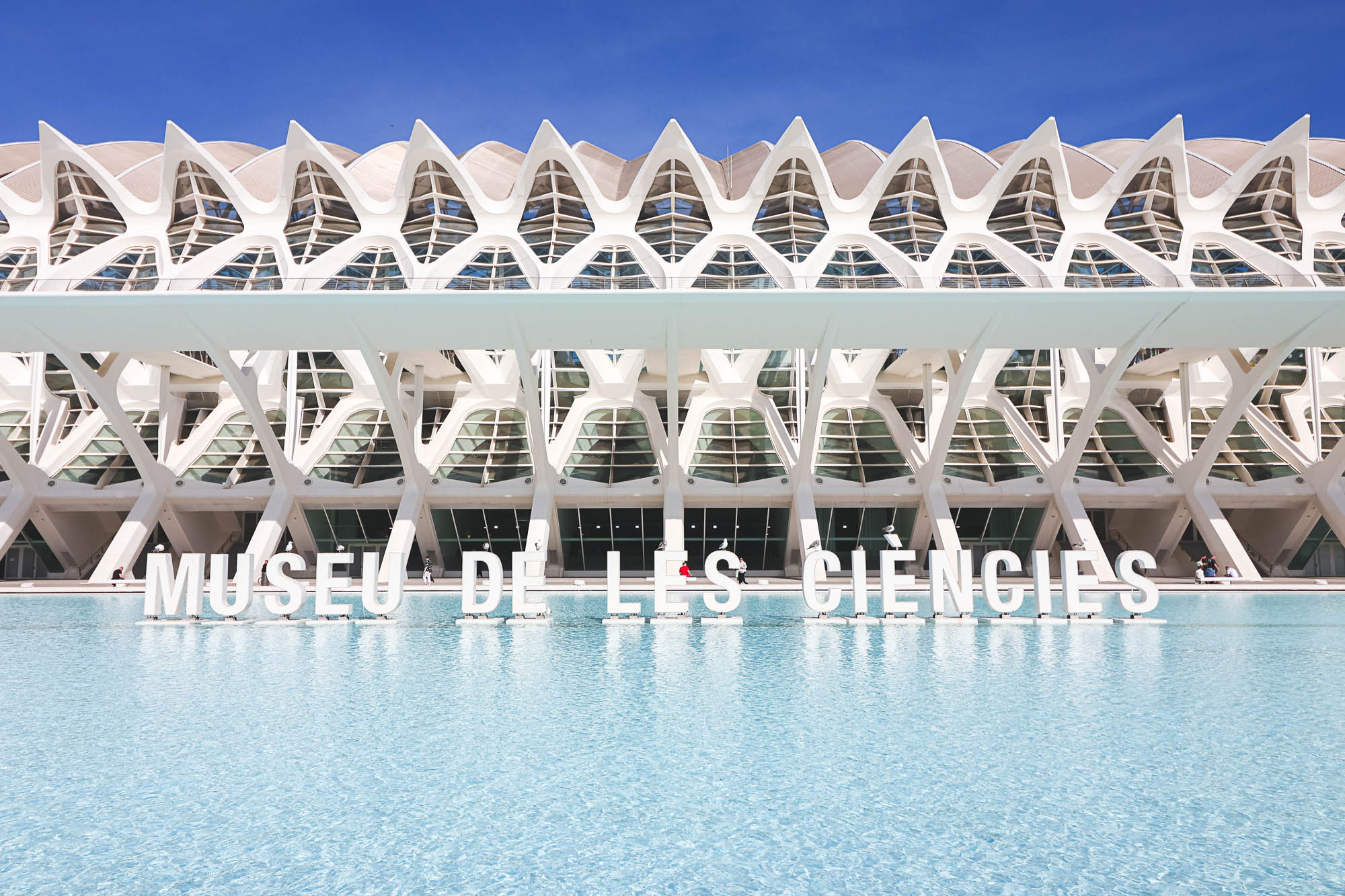
The Principe Felipe Science Museum (Museu de les Ciències Príncipe Felipe) is a prominent interactive science center located within the City of Arts and Sciences in Valencia, Spain. Designed by the renowned Valencian architect Santiago Calatrava, the building resembles the massive skeletal structure of a whale. It serves as a hub for scientific education, offering visitors a hands-on approach to understanding technology, life, and the universe.
The museum spans over 26,000 square meters of exhibition space across three main floors. Its core philosophy is “Not touching, not feeling, not thinking is prohibited,” actively encouraging visitors of all ages to interact with the displays. This engaging environment transforms complex scientific concepts into accessible and entertaining experiences.
Beyond its educational value, the museum is an architectural marvel that defines Valencia’s modern skyline. The dynamic interplay of white concrete, glass, and water pools creates a visually stunning atmosphere. It stands as a testament to the city’s commitment to innovation and cultural advancement in the 21st century.
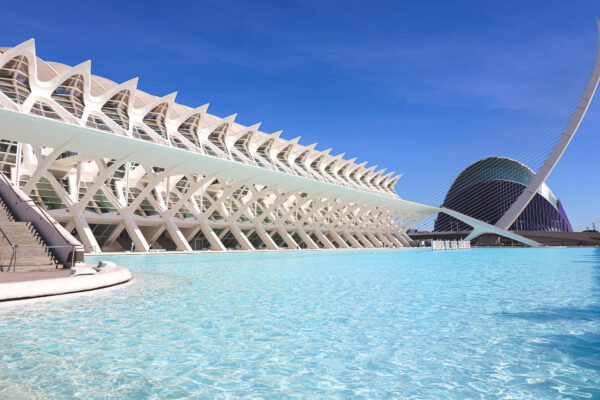
Photo by Alis Monte [CC BY-SA 4.0], via Connecting Valencia
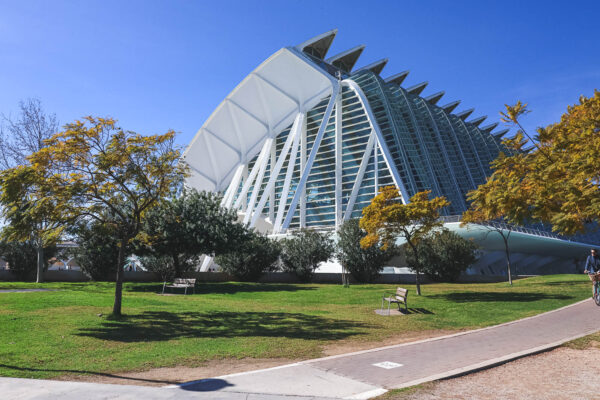
Photo by Alis Monte [CC BY-SA 4.0], via Connecting Valencia
Principe Felipe Science Museum Details
- Location: City of Arts and Sciences, Quatre Carreres
- Region: Valencia, Spain
- Address: Av. del Professor López Piñero, 7, 46013 Valencia, Spain
- Entrance: Main Entrance
- Created: 2000 (21st Century)
- Architectural Style: Futuristic / Neo-Futurism
- Entrance fee: €9.90 general; €7.60 reduced (children aged 4–12, over-65s, pensioners and disabled visitors); children under 4 free.
- Tickets: Available via the online skip-the-line ticket and on site.
- Opening hours: Daily from 10:00; closing time varies by season and day of the week. Official calendar
- Transport: Bus lines 13, 15, 24, 25, 95 (Professor López Piñero – Museu de les Ciències).
- Accessibility: Fully wheelchair accessible with ramps, elevators, and adapted restrooms.
Location
History & Development
The concept for the Principe Felipe Science Museum emerged in the early 1990s as part of a broader initiative to revitalize a dry riverbed in Valencia. The city aimed to create a monumental complex dedicated to scientific and cultural dissemination. Construction began in the late 1990s under the visionary guidance of architect Santiago Calatrava, who sought to blend art, nature, and technology.
The museum officially opened its doors to the public on 13 November 2000. It quickly became a centerpiece of the City of Arts and Sciences, drawing millions of visitors worldwide. Over the years, the institution has continuously updated its exhibitions to reflect the latest scientific discoveries and technological advancements.
Today, the museum remains at the forefront of interactive education in Europe. It frequently hosts international conferences, temporary exhibitions, and educational workshops. The Principe Felipe Science Museum stands as a lasting monument to human curiosity and the endless pursuit of knowledge.
Highlights
- Zero Gravity: An immersive exhibition developed with the European Space Agency (ESA) that explores space exploration and the universe.
- Chromosome Forest: A large-scale representation of human DNA where visitors can learn about genetics and the human genome.
- Foucault Pendulum: One of the longest in the world, stretching 34 m / 111 ft, demonstrating the Earth’s rotation.
- Science on Stage: Live scientific demonstrations and experiments that entertain and educate audiences of all ages.
- The Architecture: The building’s exterior, measuring 220 m / 722 ft in length, offers incredible photography opportunities, especially when reflected in the surrounding pools.
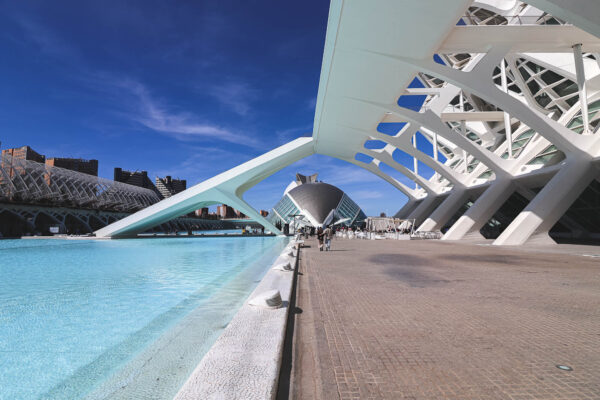
Photo by Alis Monte [CC BY-SA 4.0], via Connecting Valencia
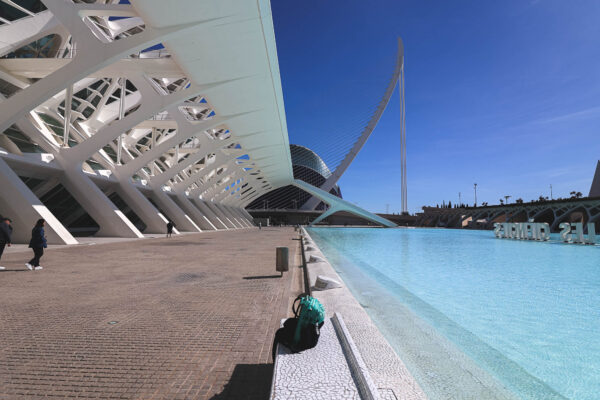
Photo by Alis Monte [CC BY-SA 4.0], via Connecting Valencia
Why Visit?
Visiting the Principe Felipe Science Museum is an engaging experience where science and fun seamlessly collide. Unlike traditional museums, every exhibit here invites you to get hands-on and explore complex concepts in a highly accessible way. You can wander at your own pace, experimenting with interactive displays that spark curiosity and encourage playful learning.
The experience caters to both discovery and enjoyment, making it an ideal destination for families, students, and curious travelers. It offers a unique opportunity to see how scientific principles apply to real life, ask questions, and leave with a fresh perspective on the world. The friendly, unpretentious atmosphere ensures that the thrill of discovery is always within reach.
Furthermore, the museum is housed in a one-of-a-kind masterpiece of modern architecture that is a must-visit sight of its own. Situated within the City of Arts and Sciences, it perfectly complements neighboring attractions like L’Oceanographic, L’Hemisferic, and the Queen Sofia Palace of Arts. Exploring this futuristic complex provides a full day of inspiration and wonder.
All photos by Alis Monte. If you want to collaborate, contact me on hi@connectingvalencia.com. Photo by Alis Monte [CC BY-SA 4.0], via Connecting Valencia.
Ticket Discounts
Holders of the Valencia Tourist Card enjoy a 10% discount on tickets to the Principe Felipe Science Museum and other attractions in the City of Arts and Sciences. You can get your Valencia Tourist Card online for 24, 48, or 72-hour options with a free cancellation policy up to 24 hours before your pickup date. Alternatively, there is a 7-day Valencia Tourist Card option that includes free entrance to the museum, L’Oceanografic, and Bioparc.
Frequently Asked Questions
What are the opening hours?
The museum is typically open from 10:00 to 18:00 on weekdays and from 10:00 to 14:00 on Saturdays. It is closed on Sundays. Please check the official website for any updates.
Is there an entrance fee?
Yes, an entrance fee applies. Discounts are available for students, seniors, and families.
How can I reach the museum?
The museum is easily accessible by public transport, with several bus lines and a nearby metro station in the City of Arts and Sciences.
Are guided tours available?
Guided tours are offered in multiple languages to enhance your visit and provide deeper insights into the exhibits.
Is the museum suitable for children?
Absolutely, the museum features interactive and educational displays that are perfect for children and families.