March 18, 2026
Fallas Valencia 2026: Guide, Schedule & Cremà Times
Top attractions:
Quick Navigation
Fallas in Valencia
Valencia is the birthplace and beating heart of the Fallas festival — one of the most spectacular celebrations on earth. Inscribed as UNESCO Intangible Cultural Heritage of Humanity in 2016, Las Fallas transforms the entire city every March into an open-air gallery of colossal satirical sculptures, thunderous fireworks, and communal fire. With around 800 monuments erected across the city’s neighborhoods before all of them burned on the night of 19 March, no other city celebrates Fallas on this scale.
The Fallas in Valencia 2026 promises to be unmissable, with daily mascletàs shaking the Plaza del Ayuntamiento to its foundations, a two-day flower offering parade that draws hundreds of thousands of people, and a Nit del Foc fireworks display that lights up the Turia riverbed. From the first spark of the Crida at the Torres de Serranos to the last embers of the Plaza del Ayuntamiento falla at midnight on 19 March, the festival consumes the whole city for weeks. Fallas transforms the city, pushing half of the population to exodus and attracting much more.
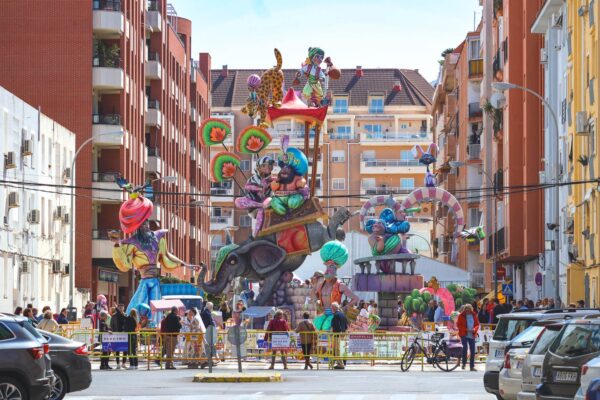
Valencia’s Fallas is more than a party — it is a citywide creative process months in the making. Each neighborhood commissions an artist to design and build a falla (a monumental papier-mâché and polystyrene sculpture), often satirizing politicians, celebrities, or current events. After days on display, almost all of them are burned in a single night. Only one ninot (a single figure from any monument) survives each year, voted for by the public and granted an official pardon — the ninot indultat.

A Brief History of Fallas Valencia
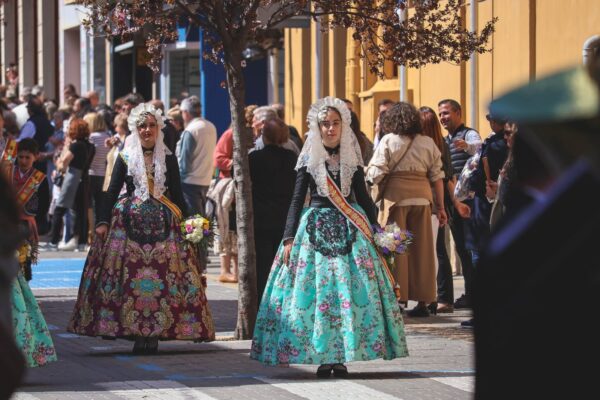
The Fallas festival has its roots in a medieval carpenter’s tradition. Every spring, Valencian craftsmen would burn their parots — wooden candelabras used to hold lights during the dark winter months — as a celebration of the return of longer days and in honor of their patron saint, St. Joseph. Over centuries this bonfire tradition merged with Carnival customs and the habit of hanging old clothes and rags on wooden effigies to mock neighbors. By the 18th century the effigies had become satirical sculptures, and a full-blown festival had taken shape.
Valencia’s Junta Central Fallera, founded in 1939, brought formal organisation to the festival — establishing prize categories, the role of the Fallera Mayor, and the official programme of events that survives today. Despite being suppressed under Franco (the festival was briefly banned and the Valencian language forbidden from fallas texts), the tradition endured and thrived. The recognition by UNESCO in 2016 confirmed what Valencians had always known: Fallas is an irreplaceable piece of living cultural heritage.
Today the festival has grown to involve over 400 neighborhood commissions, hundreds of professional artistes fallers (fallas artists), and a full calendar that runs from January appointments through to the last flames of 19 March. The Sección Especial — the top competitive category — features the most ambitious and expensive monuments in the world, some costing hundreds of thousands of euros and standing over 25 m / 82 ft tall.
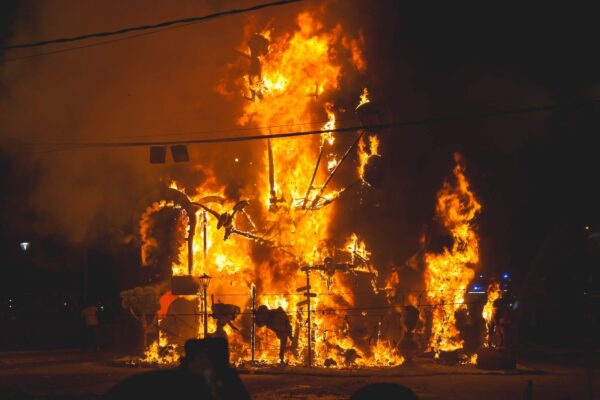
The festival’s climax, the Nit de la Cremà (Night of the Burning), is one of the most emotionally charged spectacles in Europe. At 23:00 on 19 March, the last falla to burn is always the one in the Plaza del Ayuntamiento — the city’s own municipal monument, surrounded by firefighters hosing down the surrounding buildings as the crowd cheers and weeps in equal measure. The cycle of creation and destruction is complete, and Valencia begins planning for the next year the following morning.
Fallas Valencia 2026 Details
- Location: Valencia, Spain
- Date: January 16 – March 19, 2026
- Entrance: Free (Sección Especial falla interiors: €17)
- Accommodation: Valencia
- Best viewing spot for Mascletà: Plaza del Ayuntamiento
- Fallera Mayor 2026: Carmen Prades Gil (Falla Convento Jerusalén-Matemático Marzal)
- Fallera Mayor Infantil 2026: Marta Mercader Roig (Falla Alberique-Héroe Romeu)
- Main events: Daily Mascletà (March 1–19), La Plantà (March 15–16), La Ofrenda (March 17–18), Nit del Foc (March 18), Nit de la Cremà (March 19)
Fallas Valencia Map
Where to Stay?
During Fallas, Valencia is one of the busiest destinations in Spain — book accommodation as far in advance as possible. The city centre puts you within walking distance of the main mascletà in Plaza del Ayuntamiento, the Ofrenda route along Calle de la Paz and Calle San Vicente, and the Special Section fallas concentrated in the Russafa and Gran Vía area. If you want a quieter base with easy metro access, the Benimaclet or Ruzafa neighborhoods are excellent choices. Earplugs are genuinely recommended during the main festival week.
Recommended areas: City centre, Russafa, Gran Vía, El Carmen, Benimaclet. For peaceful stays further out, the Albufera area or beach suburbs work well with public transport.
Fallas Valencia 2026 Schedule
The official programme runs from January 16 to March 19, 2026. Below are the key events and dates:
February – Opening Acts
Saturday, February 7 – March 15, 2026
- Exposición del Ninot 2026 at the Museu de les Ciències (City of Arts and Sciences). Visit the best ninots from every falla and vote for your favourite to be granted the ninot indultat (public pardon)
Saturday, February 28, 2026 – Cabalgata del Ninot
- 17:30: Cabalgata del Ninot parade — the most playful parade of the festival, departing from Glorieta (Plaza de Alfonso el Magnánimo)
March – Build-up
March 1–19, 2026 (daily)
- 14:00: Mascletà — daily pyrotechnic display in Plaza del Ayuntamiento. Each day a different pyrotechnics company performs; the ground shakes and the crowd falls silent for the final crescendo
March 6–19, 2026
- Concurso de Calles Iluminadas: illuminated streets competition across Valencia’s fallas neighborhoods
March 12–15, 2026
- 23:59: Nightly pyrotechnic shows in Plaza del Ayuntamiento
Friday, March 13, 2026
- 14:00: Mascletà — Pirotecnia Vulcano
- 20:00: Show of popular dances and songs organised by the Federació de Folklore de la Comunitat Valenciana. Location: Plaza del Ayuntamiento
- 23:59: Nocturnal pyrotechnic show — Pirotecnia Turís
Saturday, March 14, 2026
- 14:00: Mascletà — Pirotecnia Aitana
- 17:00: Closure of the Children’s Ninot Exhibition
- 17:30: Announcement of the public vote result and proclamation of the Ninot Indultat Infantil 2026
- 17:45: Collection of ninots by the commissions (until 20:00)
- 23:59: Nocturnal pyrotechnic show — Pirotecnia Tamarit
La Plantà – March 15–16, 2026
Sunday, March 15, 2026
- 09:00: Plantà of all children’s fallas
- 14:00: Mascletà — Pirotecnia Valenciana
- 17:00: Closure of the Ninot Exhibition
- 17:30: Announcement of the public vote result and proclamation of the Ninot Indultat 2026
- 17:45: Collection of ninots by the commissions (until 20:00)
- 23:59: L’Alba de les Fallas — a recovered tradition of dawn fireworks across the city, with pyrotechnic show in Plaza del Ayuntamiento. Pirotecnia Vulcano
Monday, March 16, 2026
- 08:00: Plantà of all major fallas — through the night and into the morning, commissions plant their monuments across the city. At dawn, the jury begins judging
- 14:00: Mascletà — Pirotecnia Tamarit
- 16:30: Awarding of children’s fallas prizes at the Town Hall tribune (prizes for all sections, Cabalgata del Ninot, and children’s llibrets de falla)
- 23:59: Castillo de Fuegos Artificiales (fireworks castle) at Puente de Monteolivete — Pirotecnia del Mediterráneo
Fallas Valencia Main Events
Tuesday, March 17, 2026 – Prize-giving & First Day of La Ofrenda
- 09:00: Awarding of prizes for all fallas at the Town Hall tribune — prizes for all sections, illuminated streets, presentations, and llibrets de falla
- 14:00: Mascletà — Pirotecnia del Mediterráneo
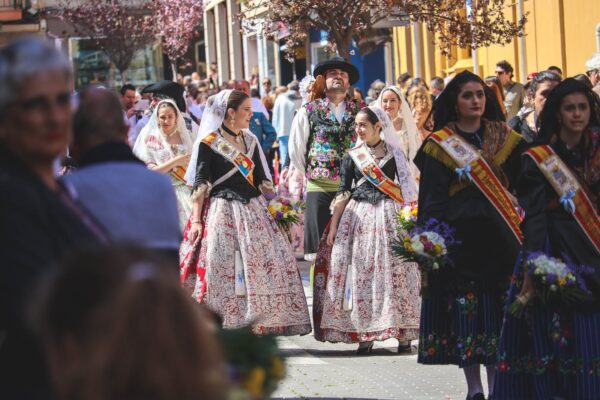
- 15:30: Ofrenda de Flores — Day 1. Falleros and falleras in traditional dress carry flower offerings to the Virgin de los Desamparados at the Plaza de la Virgen. The route runs along two parallel streets simultaneously:
- Calle de la Paz route (15:30–00:10): Rascanya → Camins al Grau → Ruzafa A → Ruzafa B → Pla del Reial-Benimaclet → Canyamelar-Grau-Nazaret → La Xerea
- Calle San Vicente route (15:30–01:00): Patraix → Botànic-La Petxina → El Carmen → Jesús → Quart de Poblet-Xirivella → La Creu Coberta → El Pilar-Sant Francesc → La Seu-El Mercat → Casas Regionales → Falla Convento Jerusalén-Matemático Marzal → Juntas Locales → Falla Alberique-Héroe Romeu → Comitiva Oficial → Fallera Mayor Infantil Marta Mercader Roig and Courts of Honor (01:00)
- 23:59: Castillo de Fuegos Artificiales at Puente de Monteolivete — Pirotecnia Zaragozana
Wednesday, March 18, 2026 – Second Day of La Ofrenda & Nit del Foc
- 10:00: Tribute to poet Maximiliano Thous at his monument (corner of Sagunto and Maximiliano Thous streets)
- 12:00: Tribute to composer Maestro Serrano at his monument on Avenida del Reino de Valencia
- 14:00: Mascletà — Pirotecnia Caballer FX
- 15:30: Ofrenda de Flores — Day 2:
- Calle de la Paz route (15:30–22:55): Quatre Carreres → Benimamet-Burjassot-Beniferri → Pla del Remei-Gran Vía → Malvarrosa-Cabañal-Beteró → Algirós → Poblats al Sud
- Calle San Vicente route (15:30–00:40): Benicalap → Campanar → La Roqueta-Arrancapins → Olivereta → Zaidia → Mislata → Casas Regionales → Falla Convento Jerusalén-Matemático Marzal → Comitiva Oficial → Últimas cinco Falleras Mayores → Fallera Mayor Carmen Prades Gil and Courts of Honor (00:40)
- 23:59: Nit del Foc — Grand Fireworks Castle at Puente de Monteolivete. The most spectacular pyrotechnic show of the festival. Pirotecnia Valenciana
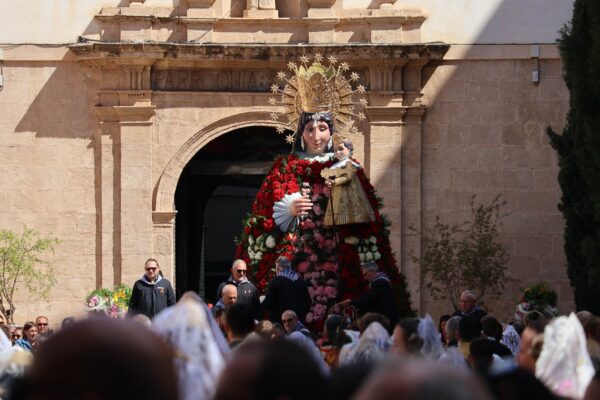
Thursday, March 19, 2026 – Sant Josep’s Day & La Cremà
- 11:00: Flower offering by the Falleres Mayores of Valencia and their Courts of Honor at the image of the Patriarca on Puente de San José. With the collaboration of falla Doctor Olóriz-Arzobispo Fabián y Fuero
- 12:00: Solemn Mass in honor of Sant Josep at Valencia Cathedral, celebrated by the Archbishop of Valencia, Don Enrique Benavent, and offered by Junta Central Fallera and the Carpenters’ Guild
- 14:00: Mascletà — Pirotecnia Hnos Caballer
- 19:00: Cabalgata del Fuego (Fire Procession) — a spectacular fire-breathing parade departing from Calle de la Paz down to Porta de la Mar, marking the prelude to the Cremà
Burning Times of the Fallas Valencia 2026
- 20:00: Cremà of all children’s fallas
- 20:30: Cremà of the children’s falla that won 1st prize in the Special Section
- 21:00: Cremà of the children’s falla in Plaza del Ayuntamiento
- 22:00: Cremà of all major fallas across the city (approximately 800 monuments)
- 22:30: Cremà of the major falla that won 1st prize in the Special Section
- 23:00: Cremà of the municipal falla in Plaza del Ayuntamiento — the last falla to burn, surrounded by firefighters hosing down surrounding buildings as the city watches
The times for the Nit de la Cremà are approximate. The Junta Central Fallera reserves the right to make changes due to unforeseen circumstances.