Top attractions:
Fallas in Denia
Nestled along the Mediterranean coast, the charming city of Denia comes alive every March with the vibrant and fiery festival of Fallas, marking one of Spain’s most unique and spirited celebrations. Inscribed as UNESCO Intangible Cultural Heritage of Humanity in 2016, this dazzling event transforms many cities across the region into a canvas of colossal effigies, fiery displays, and communal joy, showcasing a tradition steeped in creativity, satire, and the welcoming of spring. While Valencia may be the heartland of the Fallas festivities, Denia, with its own distinctive charm and fervor, offers a compelling experience that mirrors the grandeur and intensity of its larger counterpart yet maintains an intimate community feel.
The Fallas in Denia 2026 promises an unforgettable spectacle, inviting locals and visitors alike to immerse themselves in a cultural phenomenon that blends ancient customs with contemporary artistry. As a testament to the enduring bond between Denia and its ancestral traditions, the festival not only honors the town’s heritage but also serves as a dynamic platform for social commentary and artistic expression. From the intricate design of the fallas (monumental sculptures) to the exhilarating burst of fireworks lighting up the night sky, every element of the festival is a tribute to the creativity, ingenuity, and spirited communal life of Denia.
Fallas in Denia has a unique flavor of its own, the festival in the Capital of Marina Alta is a particularly attractive location for the popular Valencian festivity because the sculptures are burned one by one. This way, allows curious people to enjoy the spectacle in all parts of town bit by bit. Whether you’re drawn to the spectacle for its artistic merits, the thrill of the pyrotechnics, or the warmth of community gatherings, the Fallas festival in Denia offers a rich tapestry of experiences that resonate with the essence of Spanish festivity and tradition. Dénia’s fallas follow the same tradition as the larger festival in the capital, described in our guide to Fallas in Valencia city.

A Brief History of Fallas Denia
The roots of the Fallas festival in Denia, much like those in the rest of the Valencian Community, intertwine deeply with the region’s history, blending medieval customs, pagan rituals, and Christian celebrations into a vibrant tapestry of cultural expression. Originally, Fallas began as a feast day for St. Joseph, the patron saint of carpenters, marking the arrival of spring with the burning of waste materials and old wooden items collected during the winter. This act of purification and renewal, over centuries, evolved into the elaborate festival we witness today, characterized by the creation and destruction of fallas – elaborate sculptures that are as satirical as they are spectacular.
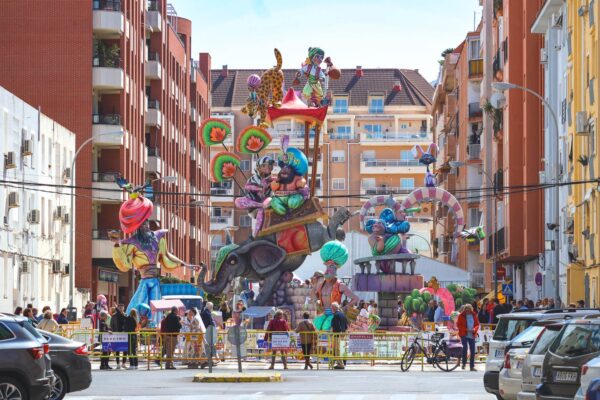
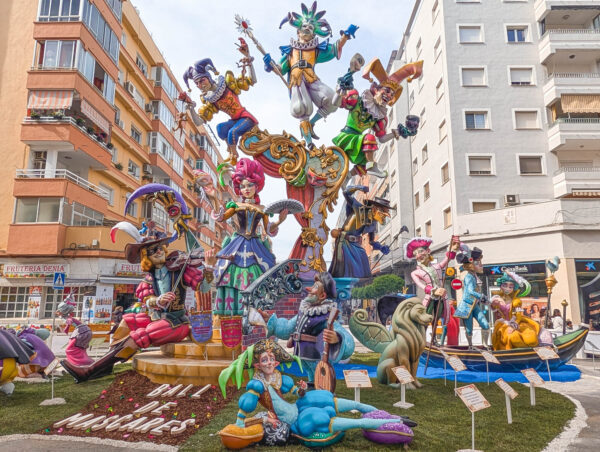
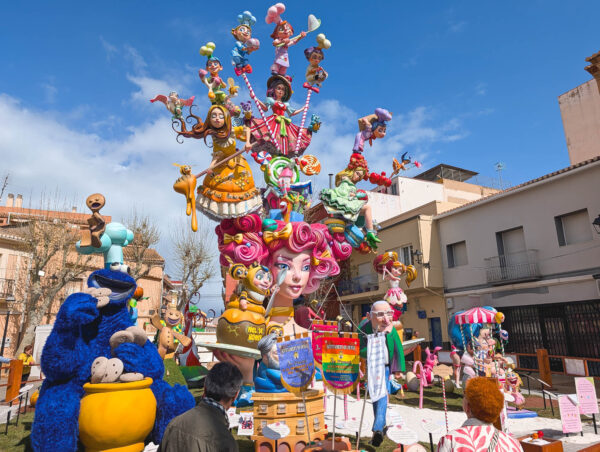
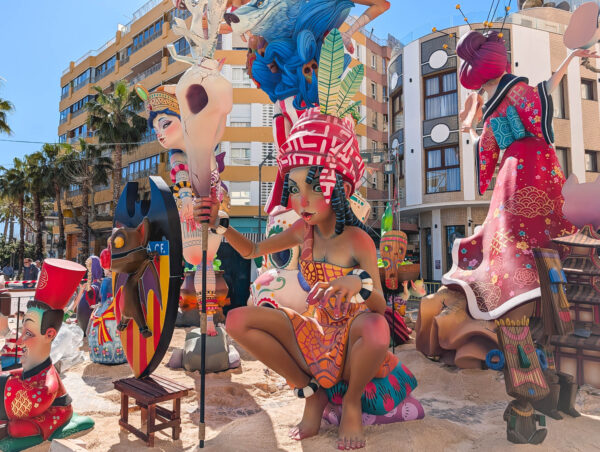
Denia’s adaptation of this tradition has grown in scale and complexity, reflecting both local and global themes through its fallas. These towering figures, crafted with incredible skill and wit, fill the city’s squares and streets, turning Denia into an open-air museum of ephemeral art. Each falla is a marvel of design, engineering, and artistry, representing months of dedication by local artists and communities. They often depict scenes of social, political, and cultural commentary, providing insight into contemporary issues with humor and creativity.
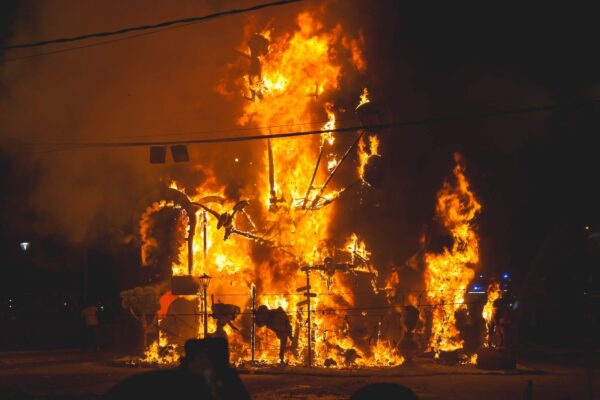
The festival’s crescendo, the ‘Nit de la Cremà’ (Night of the Burning), sees these magnificent sculptures consumed by flames in a symbolic act of regeneration and rebirth. This spectacular finale, lit against the backdrop of Denia’s historic landscapes and Mediterranean charm, is a poignant reminder of the cycle of life and the impermanence of art.
Through periods of prohibition and revival, the Fallas festival has persisted, embodying the resilience and adaptability of the Valencian spirit. Even during the Franco regime, when regional languages and traditions were suppressed, Fallas found a way to endure, adapting its forms of expression to ensure its survival. Today, recognized by UNESCO as an Intangible Cultural Heritage of Humanity, the Fallas festival stands as a testament to the community’s commitment to its cultural legacy, celebrating not just the arrival of spring but also the enduring power of creativity and community. In Denia, the Fallas festival is more than just a series of events; it is a communal act of creation, celebration, and renewal, deeply woven into the fabric of the city’s identity.
Fallas Denia 2026 Details
- Location: Denia, Spain
- Date: January 19 – March 19, 2026
- Entrance: Free
- Accommodation: Denia
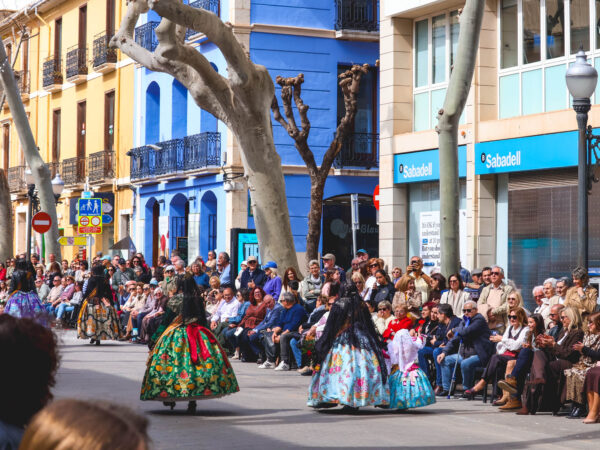
- Parade-watching location: Marqués de Campo
- Main events: The Plantà (March 10–16), La Ofrenda (March 17–18), Nit de la Cremà (March 19)
Fallas Denia Map
Where to Stay?
Having experienced the Fallas festival in Denia, it’s clear the entire city vibrates with the festival’s energy, especially during this period. Your accommodation choice should depend on what you’re looking to get out of your visit. If you’re here to dive deep into the festivities, staying close to the city center will keep you near the heart of the action. For those primarily interested in the ‘Nit de la Cremà’ and don’t mind a bit of travel, options outside the center could also work well. Denia’s local transportation, including buses and taxis, efficiently accommodates the influx of visitors, ensuring you’re never too far from the festival’s highlights.
Recommended locations: Plaza del Consell, Calle Marqués de Campo, Las Marinas Beach, Near Montgó Natural Park or any other place in Denia for a peaceful retreat.
Fallas Denia 2026 Schedule
The Fallas in Denia 2026 span from January through March, with a full programme of events filled with tradition, art, and community spirit. Here is a breakdown of the schedule:
January
Monday, January 19, 2026
- 20:30: Election of the exemplary fallero/a 2026. Location: Museu de la Festa
February – Early Events
Thursday, February 5, 2026
- 19:30: Opening and visit of the judging panel to the different fallas clubhouses participating in the decorated clubhouses (casals engalanats) prize
Saturday, February 7, 2026
- 18:00: Gathering of the Local Fallas Board, Major Falleras of Dénia, Courts of Honor, and fallas commissions at Jaume I Square
- 18:15: Visit to the clubhouses of Fallas Nou Camp Roig, París Pedrera, Saladar, Diana, Port Rotes, and Centro, and their respective bans fallers
Sunday, February 8, 2026
- 10:30: Fallero games and presentation of the Fallas 2026 poster. Location: Sala polivalente de Llunàtics
Thursday & Friday, February 12–13, 2026
- 11:00–13:00 and 17:00–19:00: Reception of ninots for the Ninot Exhibition. Location: Museu de la Festa
Friday, February 13, 2026
- 19:45: Gathering of the Local Fallas Board, Major Falleras of Dénia, Courts of Honor, and fallas commissions at Mariana Pineda Square
- 20:00: Visit to the clubhouses of Fallas Baix la Mar, Les Roques, Darrere del Castell, Campaments, and Oeste, and their respective bans fallers
Saturday, February 14, 2026
- 18:00: Gathering of the Local Fallas Board, Major Falleras of Dénia, Courts of Honor, and 2026 fallas officials. Location: Auditori Centre Social
- 18:15: Parade to the Museu de la Festa. Route: La Via street and Alacant avenue
- 18:30: Opening of the Ninot Exhibition 2026 (open until March 8). Location: Museu de la Festa
- 20:30: Fallera Gala with awards of JLF and JCF, and the Exemplary Falleros 2026 distinction awarded to Andrés Ahuir Boronat and Mark Petrie. Location: Sala Multiespai l’Androna
Sunday, February 15, 2026
- 16:00: Visit of the Local Fallas Board, Major Falleras of Dénia, and Courts of Honor to the Santa Llúcia Residence
- 18:00: Children’s Fallera Gala with awards of JLF and JCF, presented by Leyre Rodríguez Medina and Noa Sanchis Cardona. Afterwards, a snack for attending children. Location: Sala Multiespai l’Androna
Saturday, February 21, 2026 – Germanor Day
- 13:00: Germanor Day with presentation by Nerea Pastor Crespo. Awards given:
- Best decorated clubhouses (casals engalanats)
- Best ban faller
- Best storefronts (aparadors)
- Best presenters and best maintainers
- Best fallas presentations
- Best children’s ninot indultat and best ninot indultat
Afterwards, discomóvil. Location: Torrequemada
Friday, February 27, 2026
- 10:00–13:30 and 16:45–20:30: Solidarity blood donation. Location: Sala polivalente de Llunàtics
Saturday, February 28, 2026 – La Crida
- 17:45: Gathering of the Local Fallas Board, Major Falleras of Dénia, Courts of Honor, and 2026 fallas officials. Location: corner of Marqués de Campo and Calderón streets
- 18:00: Parade to Constitució Square
- 19:00: Crida by the Major Falleras of Dénia 2026, Paula Argudo Bañó and Elia Lull Ballester, and proclamation by Mireia Asunción Malonda. Location: Constitució Square
March – Build-up
March 1–16, 2026 (daily)
- 14:00: Tir de carcasses (daily firecracker announcement)
Saturday, March 7, 2026 – Falla Oeste Day
- 10:00: Gathering of Falla Oeste commission at Valgamedios Square
- 10:30: Collection of commissions (in order): Major Falleras of Dénia and JLF, Les Roques, Marítim Baix la Mar, Darrere del Castell, Campaments, Nou Camp-Roig, París Pedrera, Saladar, Diana, Port Rotes, and Centro
- 13:00: Ribbon-tying ceremony (corbatines) at l’Oeste standard
- 14:00: Bombardeo at Valgamedios Square
- 14:30: Tasting of peanuts, potatoes, and lupins on Moncada street
- 15:00: Paella tasting
- 17:00: 100% Remember party with DJs Pepe Nacho, Raul Andrade, and Jose Tur. Location: Casal Tia Vicenta (Falla Saladar). Organised by Falla Saladar
Sunday, March 8, 2026
- 12:00: Fallas Concert by l’Agrupació Artística Musical de Dénia. Location: corner of Carrer Diana and Passeig del Saladar. Organised by Falla Saladar
- Last day of the Ninot Exhibition
Monday, March 9, 2026
- 11:00–13:00 and 17:00–19:00: Collection of ninots. Location: Museu de la Festa
La Plantà – March 10–16, 2026
March 10–16, 2026
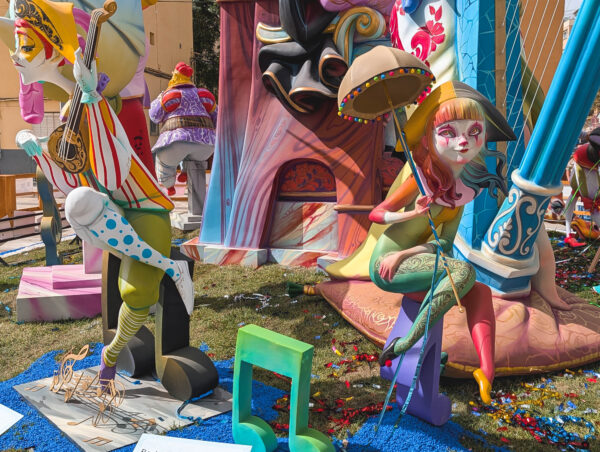
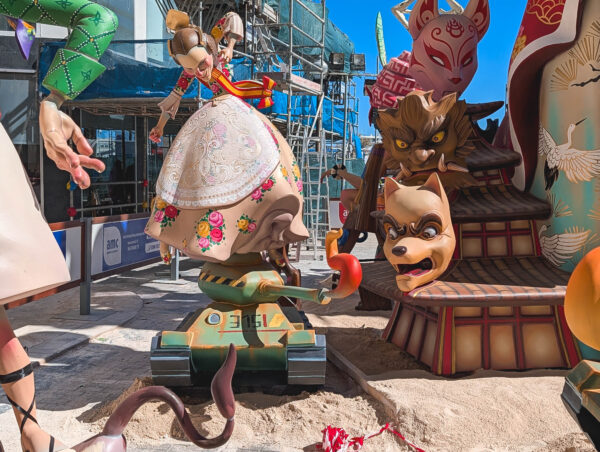
- Plantà: erection of the fallas monuments across the city districts

Construction of Paris-Pedrera Falla in Denia, 2023. Photo by Alis Monte [CC BY-SA 4.0], via Connecting Valencia
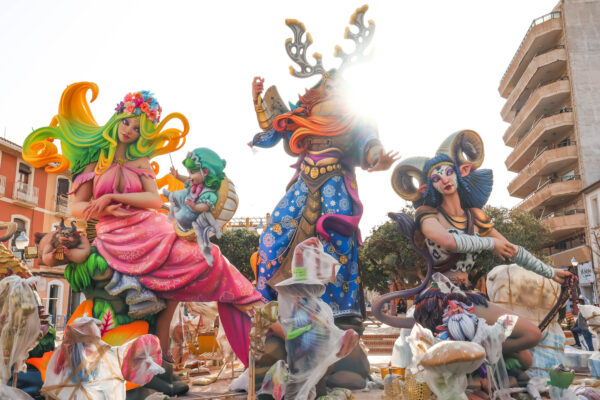
La Planta of Central Falla in Denia, 2024. Photo by Alis Monte [CC BY-SA 4.0], via Connecting Valencia.
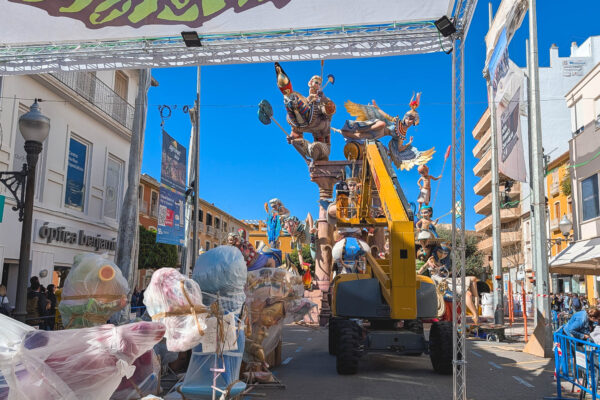
La Planta of Central Falla in Denia, 2026. Photo by Alis Monte [CC BY-SA 4.0], via Connecting Valencia.
Saturday, March 14, 2026 – First Night of Serenades & Correfoc
- 18:00: First night of serenades (albades) to the Major Falleras of Dénia and to the Major Falleras of:
- Falla Baix la Mar
- Falla Les Roques
- Falla Darrere del Castell
- Falla Campaments
- Falla Oeste
- 23:00: Correfoc (fire run). Route: from the corner of Carrer Diana and Passeig del Saladar to Carrer Manuel Latur, and back to Carrer Pintor Llorens. Organised by Falla Diana and Falla Saladar
Sunday, March 15, 2026
- First day of official plantà in the different city districts
- 11:00: Plantà of the Local Fallas Board’s falla. Location: Consell Square
- 18:00: Second night of serenades to the Major Falleras of:
- Falla Nou Camp Roig
- Falla París Pedrera
- Falla Saladar
- Falla Diana
- Falla Port Rotes
- Falla Centro
Monday, March 16, 2026
- Second day of official plantà in the different city districts
- 17:00: Hot chocolate sponsored by the Major Falleras of Dénia 2026 and their Courts of Honor. Location: Consell Square
- 18:30: Courtesy visit of the JLF, Major Falleras of Dénia, and Courts of Honor to all fallas districts in order: Nou Camp Roig, París Pedrera, Saladar, Diana, Port Rotes, Baix la Mar, Les Roques, Darrere del Castell, Campaments, Oeste, and Centro
- 22:00: Announcement rockets for the Night of the Planting
Denia Fallas Main Event
Tuesday, March 17, 2026 – La Ofrenda
- 07:00: Despertà (wake-up call) in the fallas districts
- 08:00: Visit of the judging panel to the fallas
- 09:00: Visit of the rest of the juries, including the Luis Francisco Carrió prize jury for best local critique (sponsored by Canfali Marina Alta)
- 10:15: Gathering of all commissions at Constitució Square
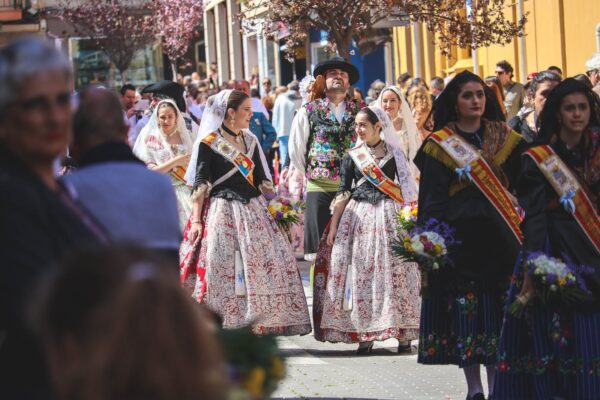
- 10:30: Parade and tribute to the Major Falleras of Dénia and to the Major Falleras of Les Roques, Darrere del Castell, Campaments, and Oeste
- 13:00: Awarding of children’s fallas prizes 2026
- 14:00: Mascletàs in the fallas districts
- 17:45: Gathering of all commissions at the exit of the castle tunnel via Ronda de les Muralles
- 18:00: Parade and tribute to the Major Falleras of Baix la Mar, Port Rotes, and Centro
- 20:00: Awarding of the prizes for the big fallas 2026
- 23:00: Festivals in the fallas districts
Wednesday, March 18, 2026 – La Ofrenda
- 07:00: Despertà in the fallas districts
- 10:00: Collections and parades in the fallas areas
- 11:15: Gathering of all commissions on Federico García Lorca street
- 11:30: Tribute to the Major Falleras of Nou Camp Roig, París Pedrera, Saladar, and Diana
- 14:00: Mascletàs in the fallas districts
- 20:00: Mascletà. Location: Jaume I Square
- 23:00: Festivals in the fallas districts
Thursday, March 19, 2026 – Sant Josep’s Day
- 07:00: Despertà in the fallas districts
- 10:00: Collections and parades in the fallas areas
- 11:00: Mass in honor of Sant Josep at the Church of l’Assumpció
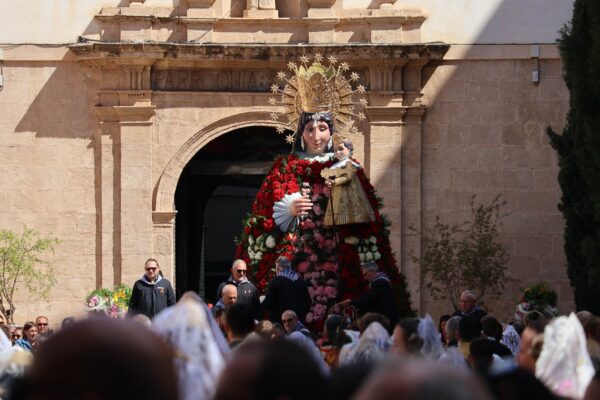
- 11:00: Flower offering to la Mare de Déu dels Desemparats. Route: Marqués de Campo, Diana, Magallanes, and Convent Square
- 14:00 (approx.): Mascletà at Passeig del Saladar (corner with Carrer Diana). Organised by Falla Saladar
- 14:30: Mascletàs in the fallas districts
- 18:00: Parades in the fallas areas
- 19:00: Reception for the new presidents/presidencies for the 2026/27 period. Location: Town Hall of Dénia
Fallas Dénia 2026 Winners
The 2026 Fallas de Dénia prizes were awarded on 17 March at the Town Hall square, crowning Falla Centro as the top monument in the Special Section with their bold “Faraonik” sculpture, praised by judges for its artistic critique, volume, and technical risk. In the First Section, Falla Port-Rotes claimed first place with “Maleficis”, recognised for its impeccable craftsmanship and finishing. The children’s categories saw Falla Baix la Mar triumph in the Special Section and Falla Diana take the top spot in the First Section.
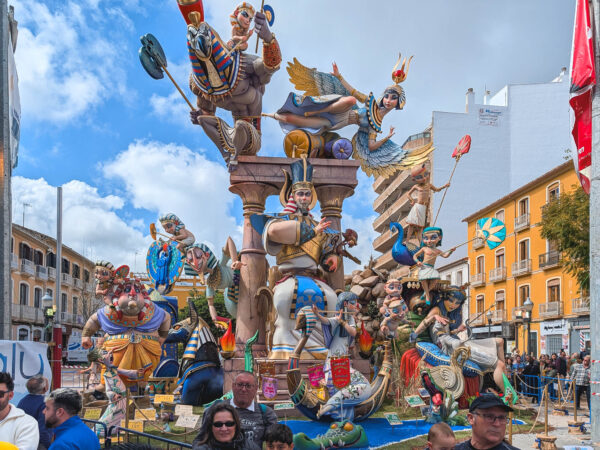
Falla Centro – the winner of special edition (2026). Photo by Alis Monte [CC BY-SA 4.0], via Connecting Valencia
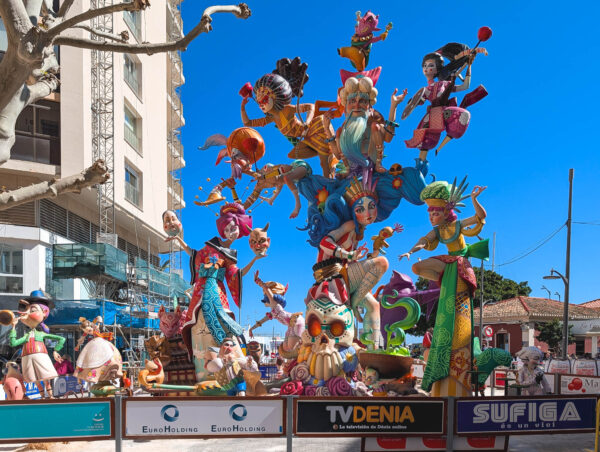
Falla Puerto-Rotes – the winner of the first section (2026). Photo by Alis Monte [CC BY-SA 4.0], via Connecting Valencia
Burning Times of the Fallas Dénia 2026
- 20:00: Burning of the Local Fallas Board of Dénia’s Falla
- 20:30: Burning of the children’s Fallas of the First Section (except 1st prize) — Falla Port-Rotes (2nd), Falla Les Roques (3rd), Falla Campaments (4th), Falla Darrere del Castell (5th), Falla Saladar (6th), Falla Nou Camp Roig (7th)
- 21:00: Burning of the winning children’s Falla of the First Section — Falla Diana (1st)
- 21:00: Burning of the children’s Fallas of the Special Section (except 1st prize) — Falla Centro (2nd), Falla París-Pedrera (3rd), Falla Oeste (4th)
- 21:30: Burning of the winning children’s Falla of the Special Section — Falla Baix la Mar (1st)
- 22:30: Burning of the 7th and 6th prize Fallas of the First Section — Falla Campaments (7th), Falla Nou Camp Roig (6th)
- 23:00: Burning of the 5th and 4th prize Fallas of the First Section — Falla Saladar (5th), Falla Les Roques (4th)
- 23:30: Burning of the 3rd and 2nd prize Fallas of the First Section — Falla Diana (3rd), Falla Darrere del Castell (2nd)
- 23:45: Burning of the 1st prize winner of the First Section — Falla Port-Rotes (1st)
- 00:30: Burning of the 4th and 3rd prize Fallas of the Special Section — Falla París Pedrera (4th), Falla Oeste (3rd)
- 01:15: Burning of the 2nd prize Falla of the Special Section — Falla Baix la Mar (2nd)
- 01:30: Burning of the 1st prize winner of the Special Section — Falla Centro (1st)
The times for the Nit de la Cremà (Burning of the Fallas) are approximate.
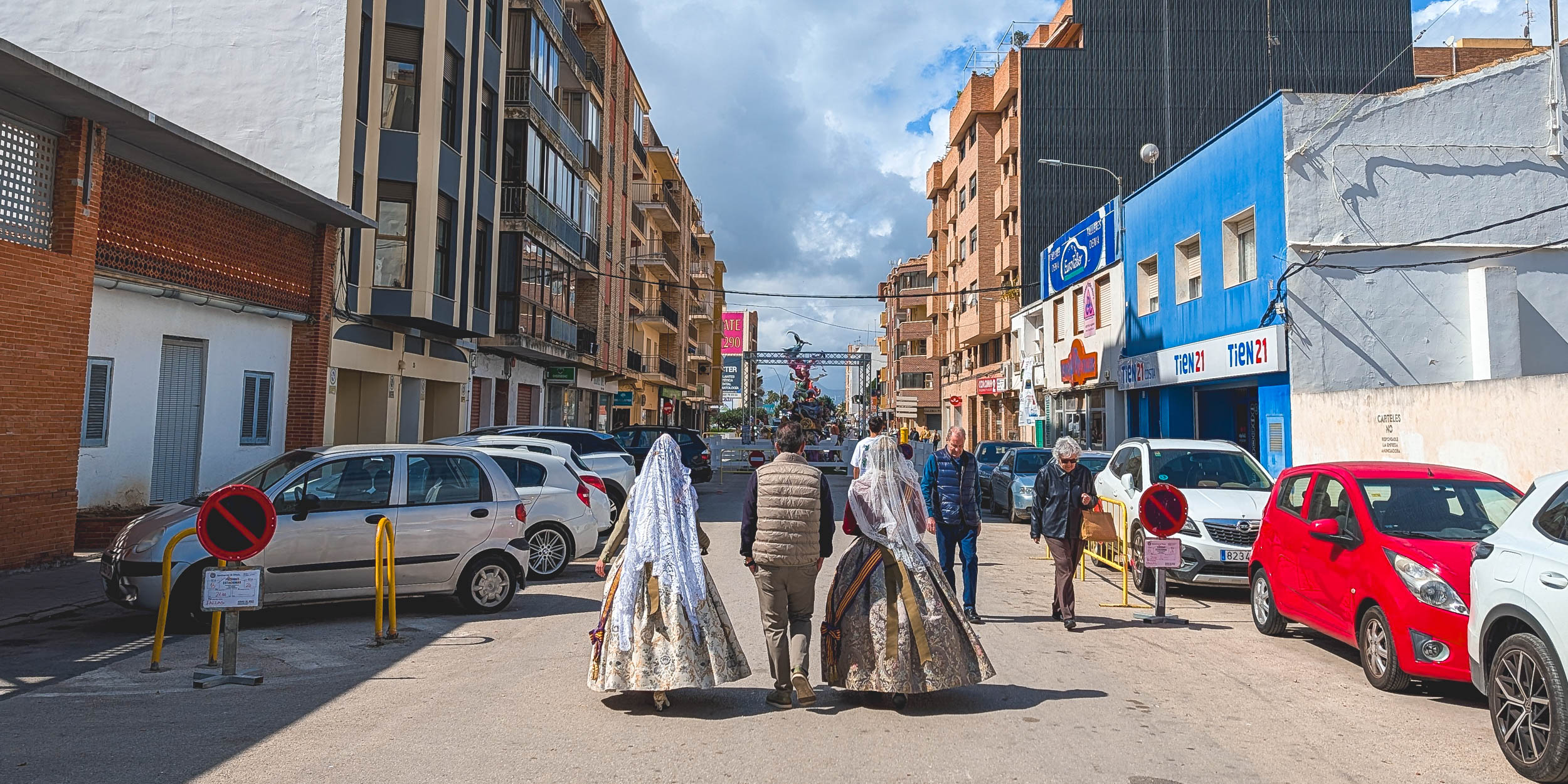
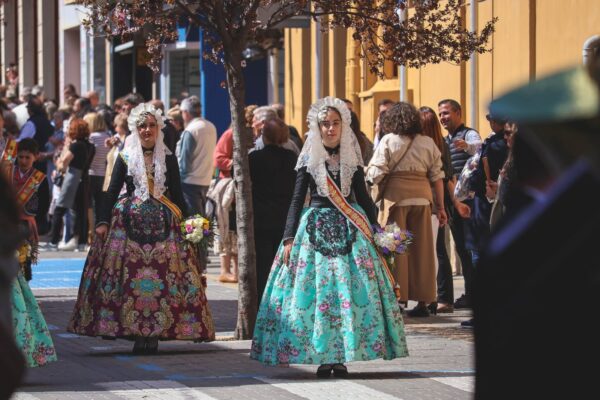
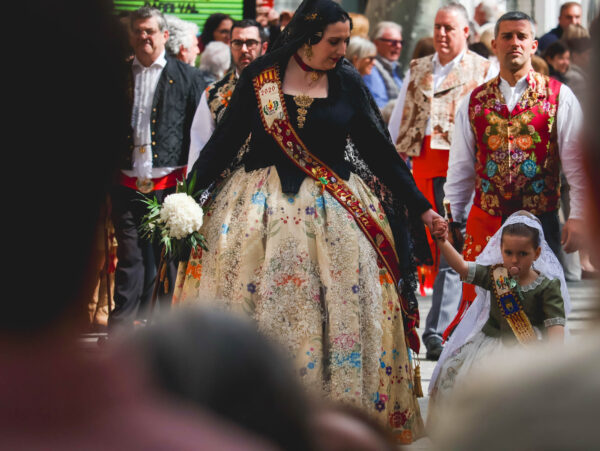
Two falleras walking towards Falla Campaments. Photo by Alis Monte [CC BY-SA 4.0], via Connecting Valencia
References & Useful Links
- Fallas de Denia 2026 Schedule Source (In Spanish)
- Public Transport
- Alsa Buses
- Alicante-Benidorm-Denia Tram
- Taxi in Denia
- Accommodation in Denia on Booking.com
Gallery of Fallas Denia
2022
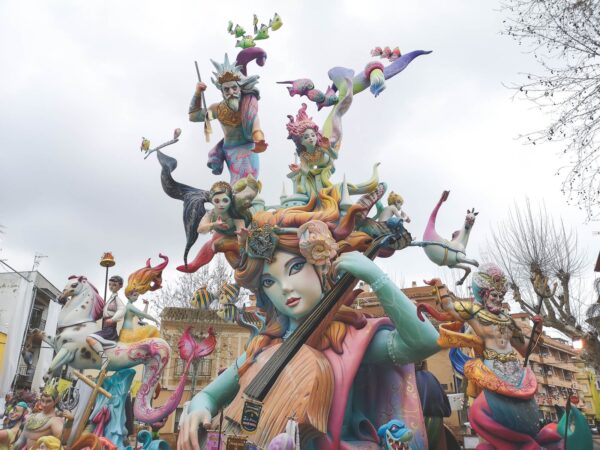
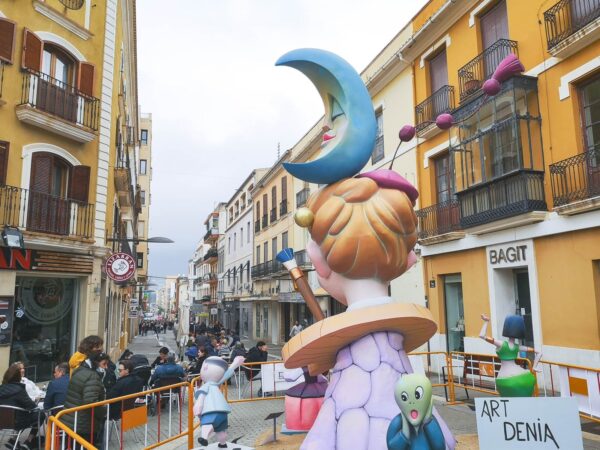
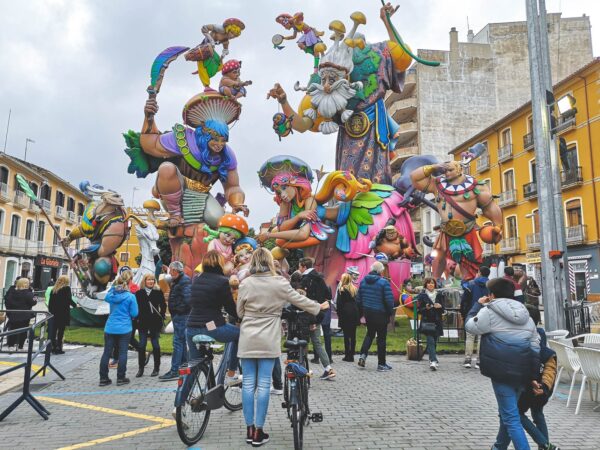
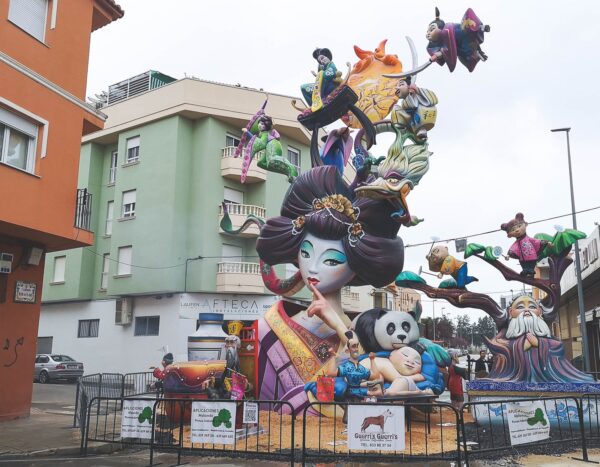
The 2022 edition marked the joyful return of Fallas after the pandemic pause, with the top prize going to Falla Baix la Mar for their monument “Qui mou els fils?” (“Who Pulls the Strings?”) — a satirical look at the hidden powers that control society.
2023
The first fully uninterrupted Fallas since the pandemic, the 2023 edition saw Denia celebrate with renewed energy. Falla Saladar won the Special Section with a monument blending local identity and sharp social commentary. The Nit de la Cremà drew large crowds back to the streets, burning the sculptures one by one across the districts.
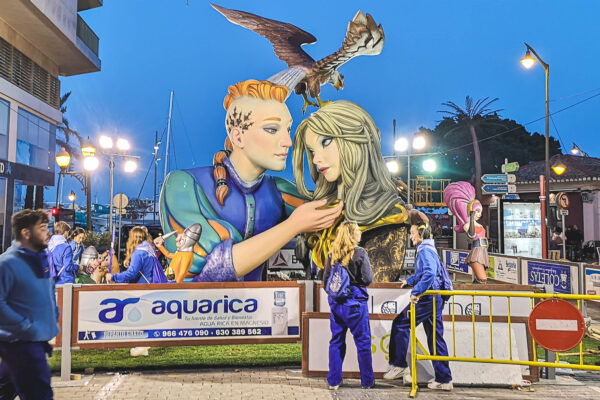
Falla Puerto-Rotes, Denia (2023). Photo by Alis Monte [CC BY-SA 4.0], via Connecting Valencia
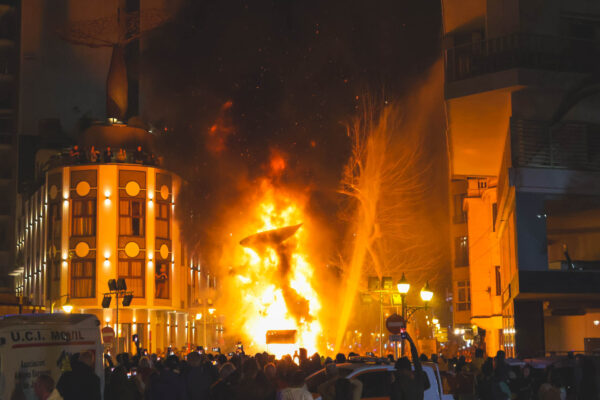
Now burned to ashes. Photo by Alis Monte [CC BY-SA 4.0], via Connecting Valencia
2024
Falla Centro took the Special Section first prize with “2030” by artist Pere Baenas — a monument referencing the United Nations Sustainable Development Goals and the urgency of the 2030 deadline.
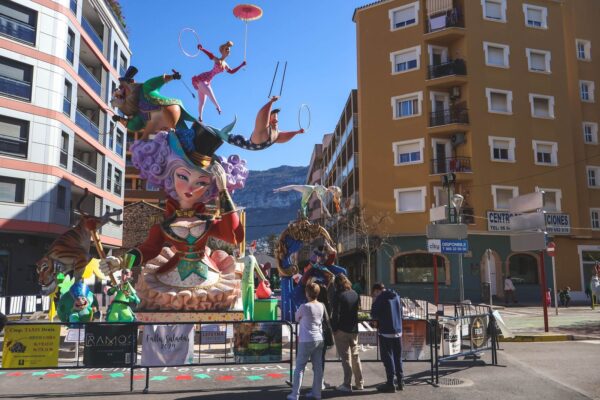
Falla Saladar (2024). Photo by Alis Monte [CC BY-SA 4.0], via Connecting Valencia

Falla Centro (2024). Photo by Alis Monte [CC BY-SA 4.0], via Connecting Valencia
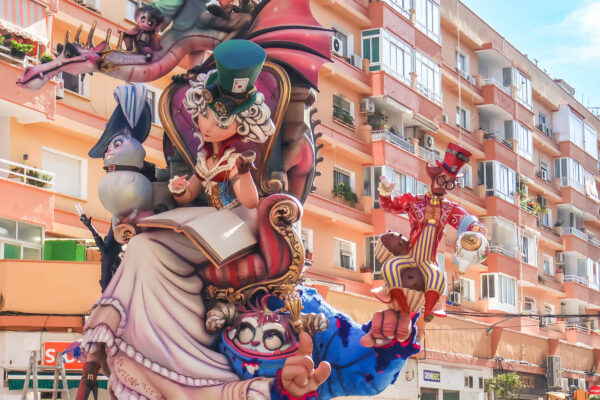
Falla Paris-Pedrera (2024). Photo by Alis Monte [CC BY-SA 4.0], via Connecting Valencia
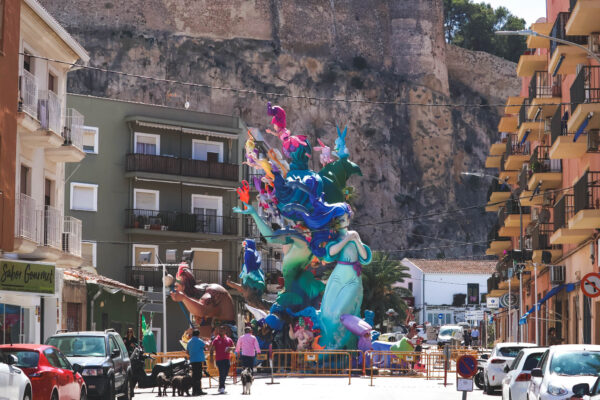
Falla Baix la Mar (2024). Photo by Alis Monte [CC BY-SA 4.0], via Connecting Valencia
2025
The 2025 edition was marked by impressive construction ambition during La Plantà, with Falla Centro raising a particularly elaborate monument that dominated the town centre. Well-attended Ofrenda parades and a fiery Correfoc made it one of the most spirited editions in recent years.
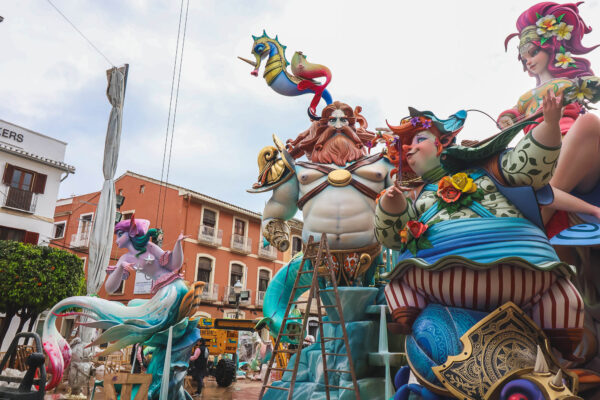
La Planta of Central Falla in Denia, 2025. Photo by Alis Monte [CC BY-SA 4.0], via Connecting Valencia.
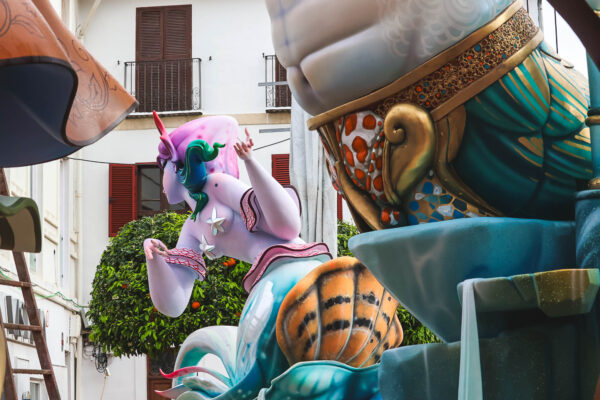
One of the sculptures of Central Falla in Denia, 2025. Photo by Alis Monte [CC BY-SA 4.0], via Connecting Valencia.
2026
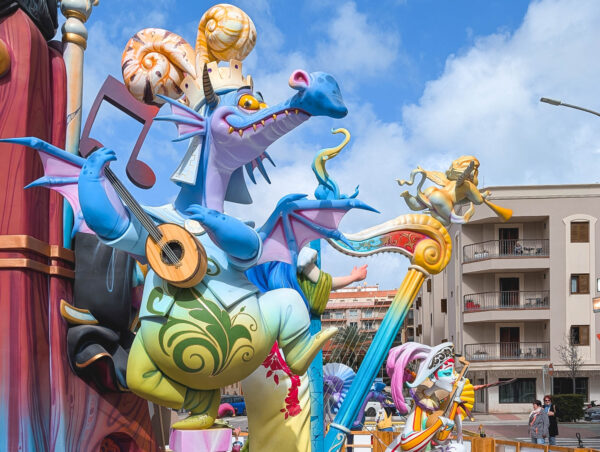
Falla Centro claimed first prize again with “Faraonik” by Josué Beitia — a bold satirical attack on modern-day megalomaniacs and the “new pharaohs” who seek to rule the world.
Frequently Asked Questions
When are the Fallas in Denia 2026?
The Fallas in Denia 2026 will be held from January 19 to March 19.
When the Fallas in Denia are planted?
The planting of the Fallas monuments in Denia usually occurs from March 10 to March 16.
When is the main event of the Fallas in Denia?
The main event of the Fallas in Denia is the Nit de la Cremà (Burning of the Fallas), which takes place on March 19.
When is the Flower Offering to Virgin Mary of the Fallas in Denia?
The Flower Offering to the Virgin Mary typically occurs on March 19, as part of the St. Joseph's Day celebrations.
When the Fallas in Denia are burned?
The burning of the Fallas in Denia takes place on March 19, with the schedule starting from 8:00 PM and lasting until approximately 1:30 AM.
How many Fallas are there in Denia?
The number of Fallas in Denia may vary, but typically there are several Fallas monuments erected throughout the city for the festival.