October 13, 2026
Guadalest Castle and Village: History, Hours and Reservoir
Architecture, Culture, Guide, History
Top attractions:
About Guadalest
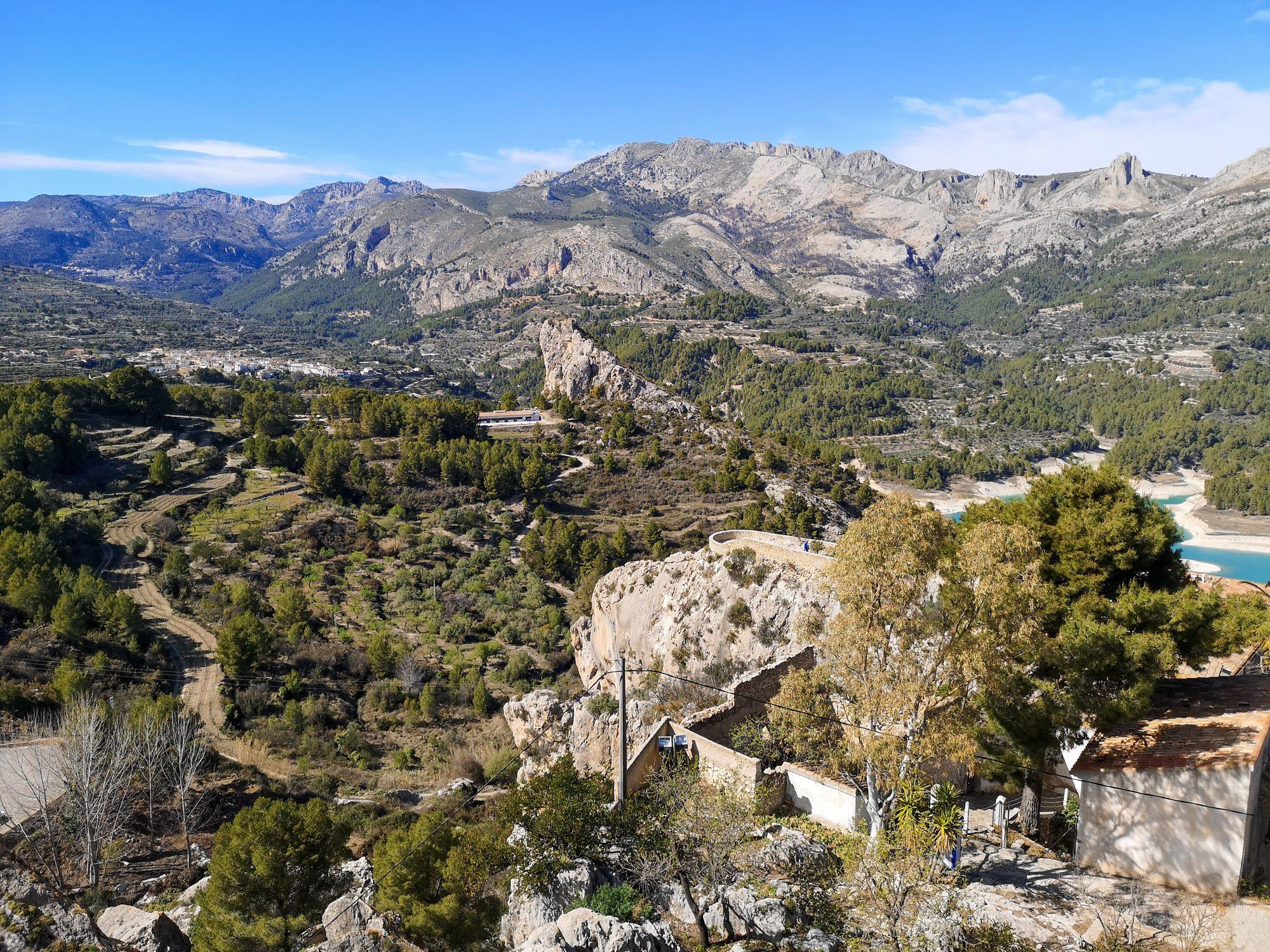
Guadalest, officially El Castell de Guadalest, is a village of the Marina Baixa built on and around a rock spur 587 m / 1,926 ft up in the Guadalest valley, ringed by the Serra de Xortà to the north, Aitana to the south and Serrella to the west. Its old town is reached only through a tunnel cut into the rock, and above it stand the ruins of two Andalusi castles, a free-standing bell tower and the noble house of the Orduña family, the castle’s hereditary governors from 1669. Below, the valley holds a mid-20th-century reservoir whose colour changes with the level of the water.
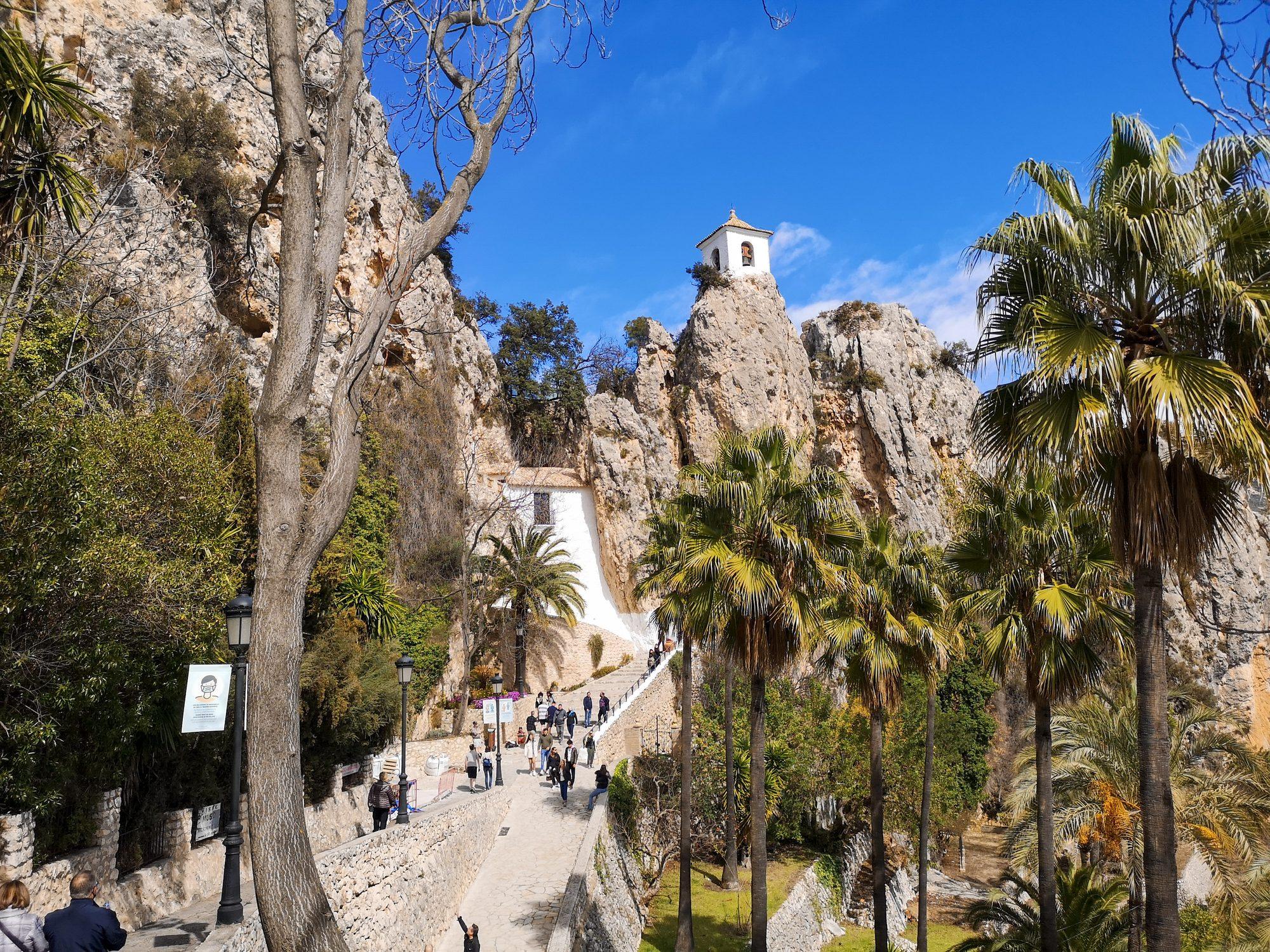
The path up to the bell tower on its rock. Photo by Alis Monte [CC BY-SA 4.0], via Connecting Valencia
Guadalest Details
- Location: El Castell de Guadalest, Marina Baixa, Alicante province
- Altitude: 587 m / 1,926 ft
- Distance: 134 km / 83 mi from Valencia (about 1 h 45 min by car); 21 km / 13 mi from Benidorm (about 30 min)
- Castle access: only through the Orduña House Museum (Museo Municipal Casa Orduña)
- Opening hours (Casa Orduña and castle): daily 10:15–19:00 in high and mid season, 10:15–18:00 in low season; closed 14:00–15:00 on Thursdays and Sundays
- Other museums: hours vary by season; see the council’s museum page
- Parking: municipal car park at the entrance to the village, by the Arrabal
- Getting there: by car or on a tour
- Day tour from Valencia: From Valencia: Excursion to Guadalest, Altea and Admission to the Algar Waterfalls
History
Both of Guadalest’s castles were built in the 11th century, when the valley was part of al-Andalus. After the Christian conquest of the 13th century the village kept a large Muslim population under Catalan-Aragonese lords, and in this remote valley Muslim communities went on working their land until the end of the Mudéjar period. Jaume II granted the castle in fief to Bernat de Sarrià in 1293; in 1335 it passed to the Crown, then to the Infante Pere, the Dukes of Gandia and the Cardona family, Admirals of Aragon. In the 1540s Joanna and Charles I made Sancho de Cardona Marquis of Guadalest; he married María de Colón y Toledo, a granddaughter of Columbus.
The Orduña, a family of Basque origin who came to the valley as trusted men of the Cardona, became perpetual alcaides, governors of the castle, in 1669; after the seigneuries were abolished in the 19th century they went on to serve as president of the Diputación de Alicante, civil governor, deputy and senator, until the last of the line died in 1934. The valley’s majority population were Moriscos, and their expulsion in 1609 left a void that a settlement charter (carta pobla) of 1611 tried to fill. Then came ruin: the earthquake of 22 June 1644 wrecked the castle and split off part of its rock, the Cantalar; in 1708, during the War of the Spanish Succession, a mine blast destroyed its west wing and Casa Orduña was burned and sacked; further quakes followed in 1748 and 1752, and in 1848 the walls were demolished and the garrison withdrawn. The village was declared a historic-artistic ensemble (conjunto histórico-artístico) in 1974, and the council bought Casa Orduña in 1994 to make it the municipal museum.
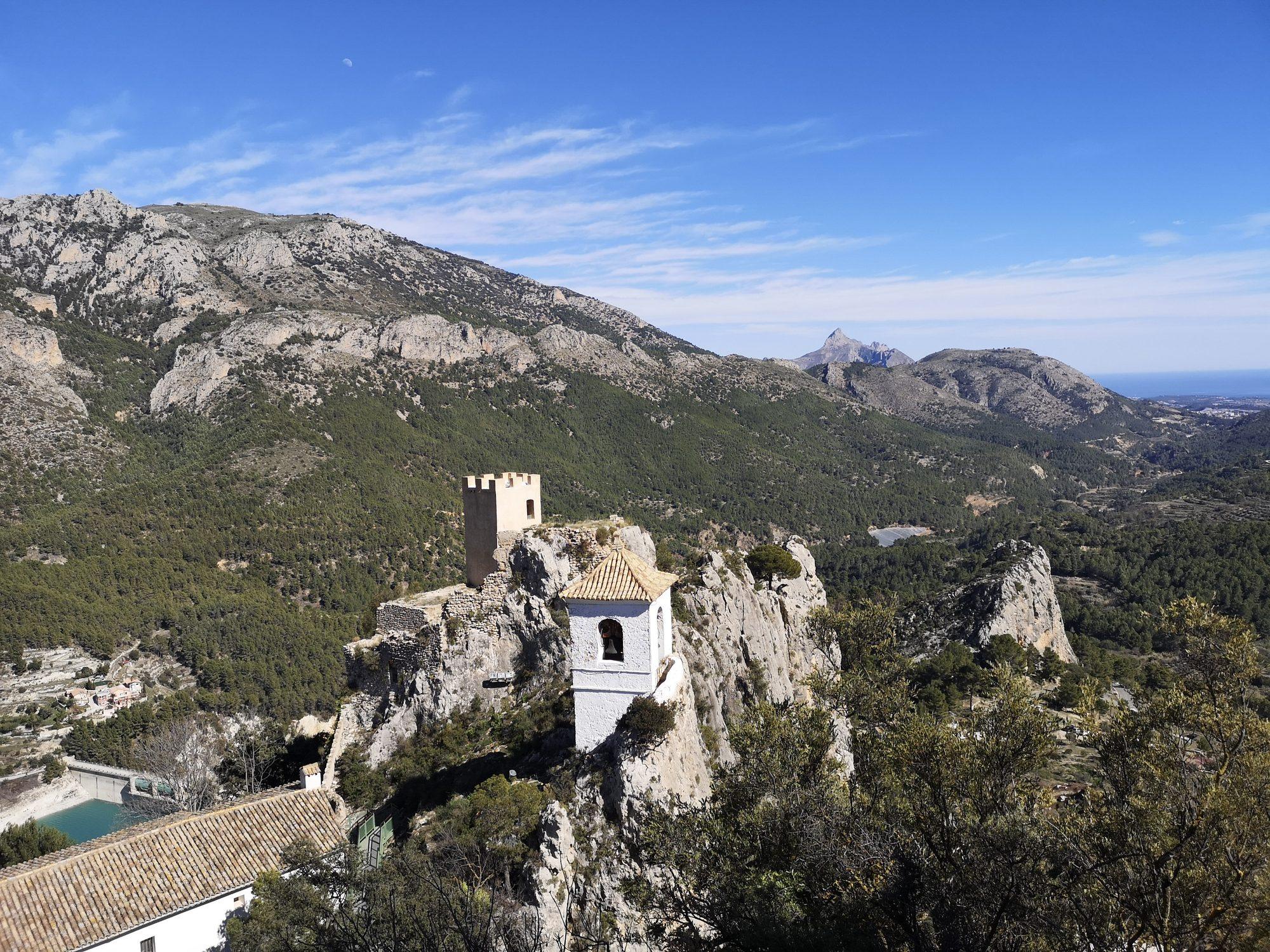
The bell tower stands apart from the church on its own spur of rock. Photo by Alis Monte [CC BY-SA 4.0], via Connecting Valencia
Guadalest Castle and the Old Town
The way into the old town is a tunnel cut through the rock, whose entrance door survives. Inside, the Orduña House Museum (Museo Municipal Casa Orduña) is the family’s noble house, built after the 1644 earthquake, with its kitchen, dining room, bedrooms, library and exhibition halls; the recumbent image of the village’s patron, the Mare de Déu de l’Assumpció, is venerated here. The house is also the only way up to Guadalest Castle (Castillo de San José; Castell de Sant Josep in Valencian), on the highest point of the rock, where the keep survives among the ruins. The ruined tower of the second fortress, Alcozaiba Castle (Castillo de la Alcozaiba), stands in the grounds of the old Casa Orduña.
On the way up you pass the bell tower, standing apart from the church on its own spur of rock. The parish church, the Church of Our Lady of the Assumption (Iglesia de Nuestra Señora de la Asunción), is a Baroque building of 1740–1753 attributed to José Sierra, raised on the site of a 13th-century church; it was burned and sacked in the Civil War, remodelled in 1962 and given a new altarpiece in 2018. Beneath the town hall is a 12th-century prison (Prisión del siglo XII), and the Ethnological Museum (Museo Etnológico), in an 18th-century house on the rock, shows how the valley lived and worked.
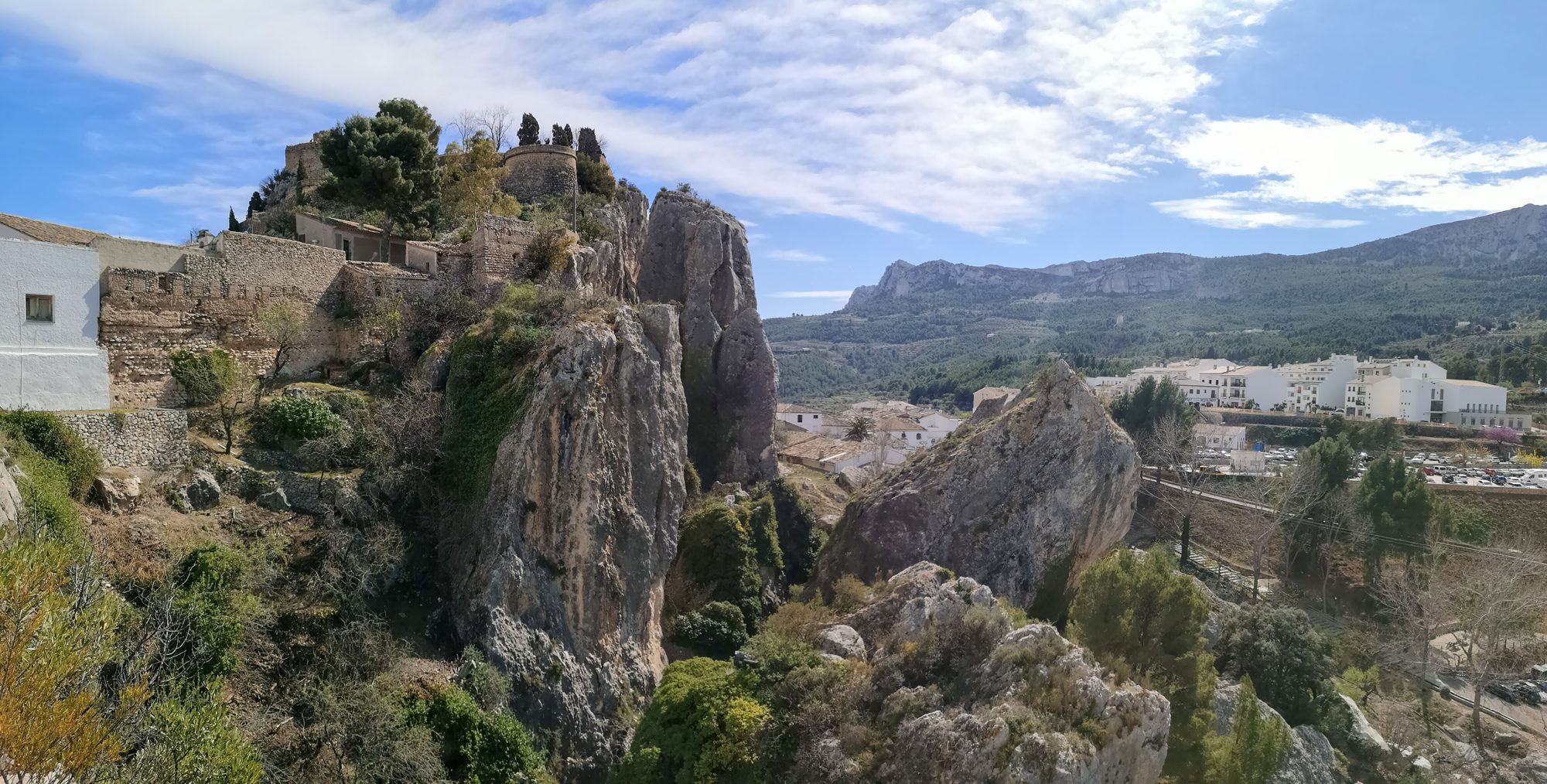
The ruins of the castle on the crags above the village. Photo by Alis Monte [CC BY-SA 4.0], via Connecting Valencia
Guadalest Reservoir
Below the village, the Guadalest Reservoir (Embalse de Guadalest) is held back by a concrete dam 77.2 m / 253 ft high on the Guadalest river, built in the mid-20th century for flood defence, irrigation and water supply. Its colour, turquoise in many photographs, depends on the level of the water and varies from visit to visit. The terraces around it are planted with citrus, olives, carob and almonds. The viewpoint at the dam has its own parking and is accessible to wheelchair users.
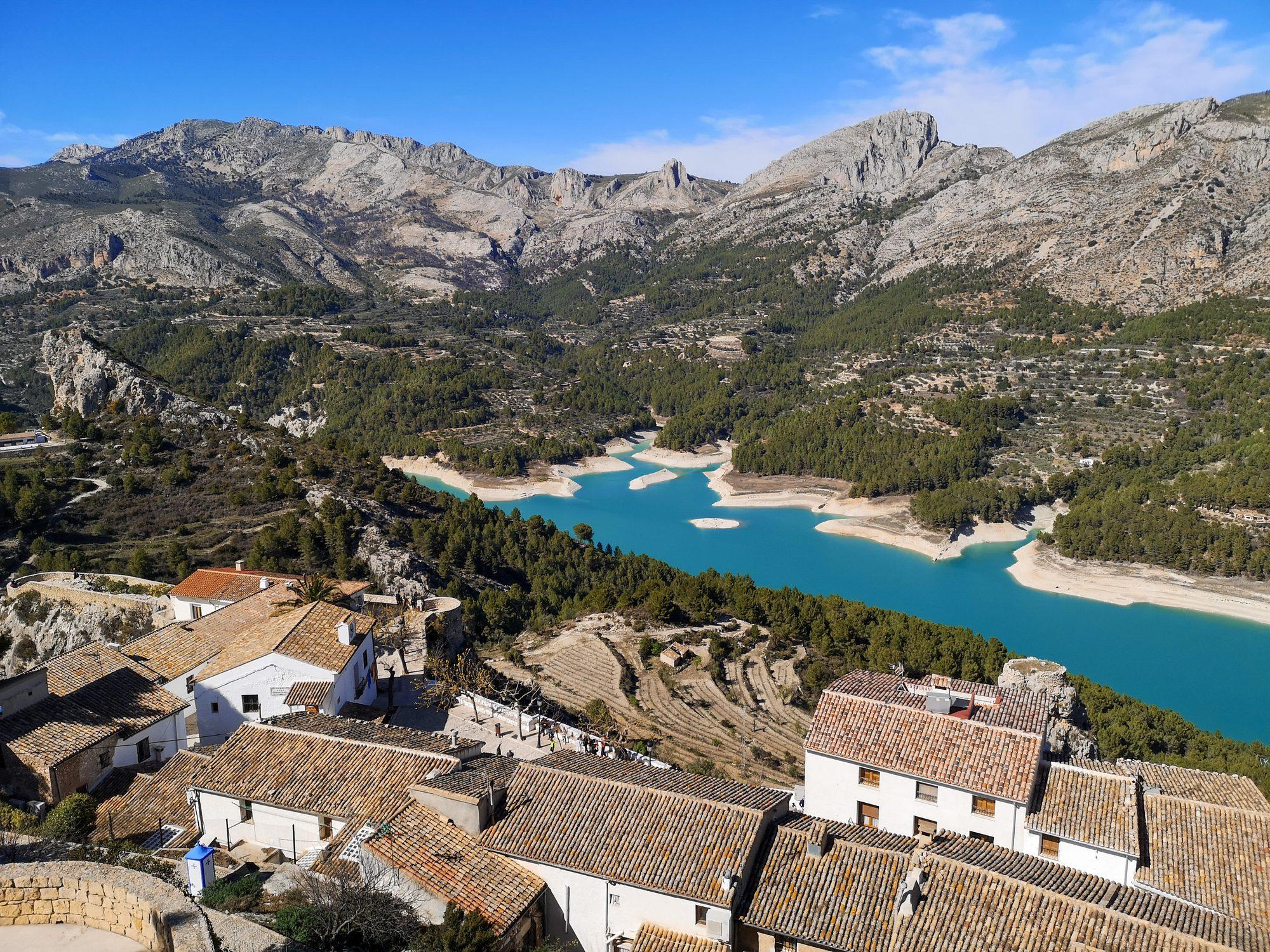
The reservoir beyond the village rooftops. Photo by Alis Monte [CC BY-SA 4.0], via Connecting Valencia
Museums in Guadalest
Besides Casa Orduña and the Ethnological Museum, the village has a cluster of private museums, most of them in the lower quarter, the Arrabal, by the car park. Hours vary by season and are listed on the council’s museum page (Spanish).
- Microminiatures Museum (Museo Microminiaturas): works by Manuel Ussá, including the Statue of Liberty in the eye of a needle and Goya’s Fusilamientos painted on a grain of rice
- Microgiant Museum (Museo Microgigante): more Ussá miniatures, such as a bullring on a pinhead, alongside giant sculptures
- Salt and Pepper Shaker Museum (Museo Saleros y Pimenteros): more than 20,000 pieces from 1800 onwards
- Nativity and Dollhouse Museum (Museo Belén y Casitas de Muñecas): Antonio Marco’s dollhouses, a nativity scene and antique toys
- Medieval History Museum (Museo Histórico Medieval): more than 70 instruments of torture and execution over four floors
- Historic Vehicles Museum (Museo Colección Vehículos Históricos Valle de Guadalest): about 140 motorcycles and microcars from the 1920s to the 1970s, on the Callosa road outside the village
Valencian Food and Fiestas
Guadalest is a Valencian-speaking village, and its cooking is mountain food. Look for l’olleta de blat, a stew of wheat, beans and pork with blanquet sausage; pebreres farcides, peppers stuffed with rice and minced meat; arròs amb fesols i naps, rice with beans and turnips; and minxo, a flatbread topped with chard, garlic and melva tuna. For something sweet there are mantegats and pastissos de moniato, sweet-potato pasties. The village honours its patron Sant Gregori in May, with a mass, a procession and the blessing of the water, and holds its fiestas patronales in mid-August for the Mare de Déu de l’Assumpció, Sant Roc and the Virgen de los Dolores.
Visiting Guadalest
The old town, the climb to the castle and one museum fill a half day; with the Fonts de l’Algar waterfalls or Altea it becomes a full day, as on the organised tours. The village is small and popular with coach tours, so arrive early. The terrain is steep, with steps and the rock tunnel: the council’s accessible routes cover the Salt and Pepper, Microgiant, Nativity and Historic Vehicles museums, the dam viewpoint and the car-park area, but not the old town, Casa Orduña or the castle.
Getting there: you need a car or a tour. By car, Guadalest is about 1 h 45 min from Valencia, 30 minutes from Benidorm and 25 minutes from Altea; park in the municipal car park at the entrance to the village and walk up. Without a car, the From Valencia: Excursion to Guadalest, Altea and Admission to the Algar Waterfalls tour pairs Guadalest with Altea and the Algar waterfalls. Guadalest is one of our day trips from Valencia, and our day trips from Benidorm cover it from the coast.
All photos by Alis Monte. If you want to collaborate, contact me on hi@connectingvalencia.com. Photo by Alis Monte [CC BY-SA 4.0], via Connecting Valencia