Top attractions:
Day Trips from Valencia
Within two and a half hours of Valencia lie six towns that tell the story of the old Kingdom of Valencia better than any museum: Xàtiva, the second city of the kingdom and home of the Borja popes; Peñíscola, the rock where the last Avignon pope held out; Morella, the walled frontier town that sat first among the kingdom’s towns in the Corts; Guadalest, a castle village above a mountain reservoir; and Altea and Calpe on the Costa Blanca. Only two of them, Xàtiva and Peñíscola, are easy by train. Altea and Calpe are best reached by coach, and Morella and Guadalest need a car or a tour.
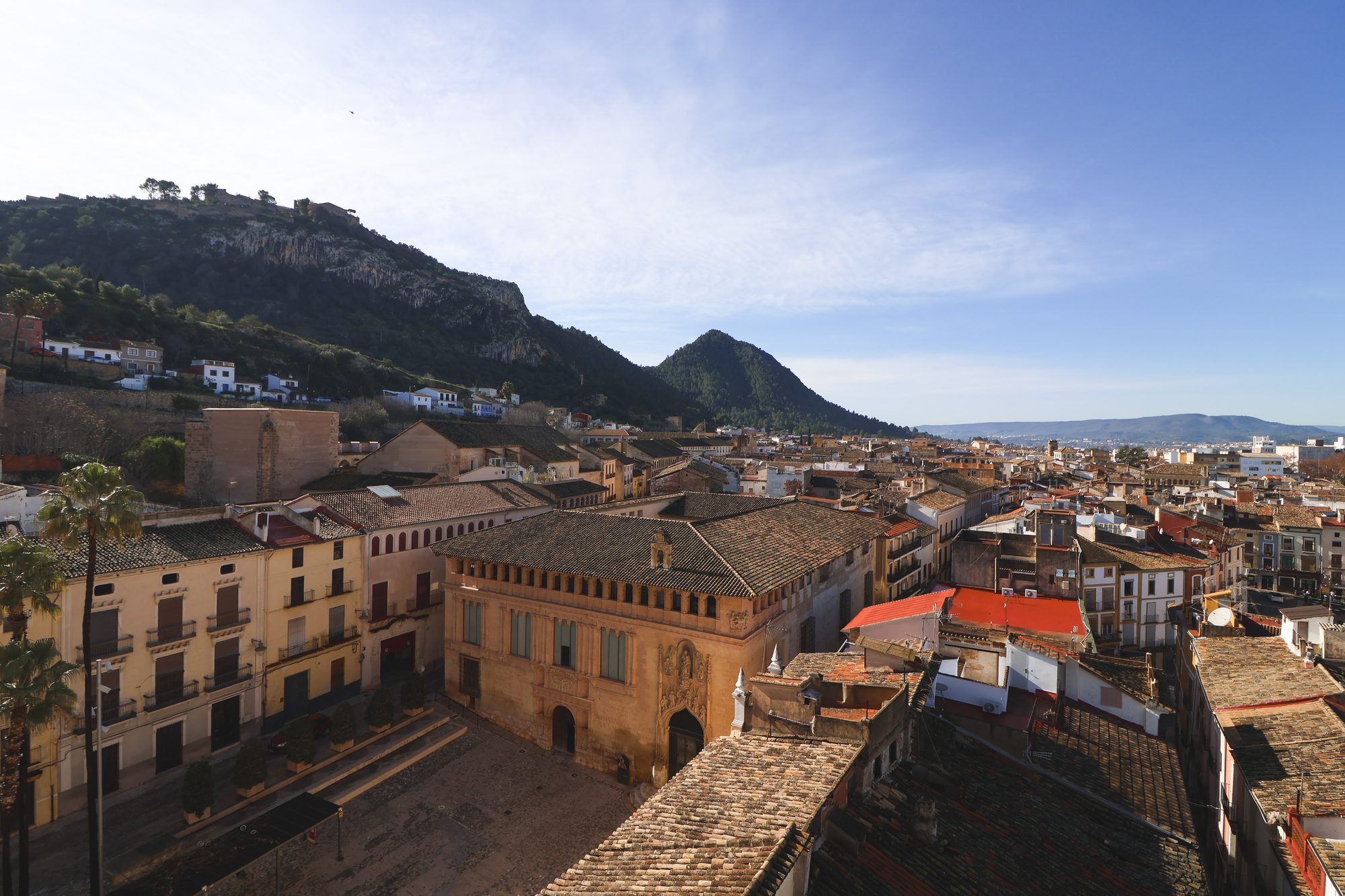
Xàtiva’s old town below the castle hill. Photo by Alis Monte [CC BY-SA 4.0], via Connecting Valencia
Day Trips at a Glance
| Town | Distance | By car | Without a car |
|---|---|---|---|
| Xàtiva | 62 km / 39 mi | about 50 min | Cercanías C2 train, about 1 h, direct |
| Peñíscola | 145 km / 90 mi | about 1 h 45 min | Train to Benicarló-Peñíscola, then a 25-minute bus |
| Morella | 171 km / 106 mi | about 2 h 20 min | No train; car or tour |
| Guadalest | 134 km / 83 mi | about 1 h 45 min | No train; car or tour |
| Altea | 132 km / 82 mi | about 1 h 40 min | ALSA coach |
| Calpe | 122 km / 76 mi | about 1 h 30 min | ALSA coach |
Driving times are for clear roads from the city centre; allow extra time for traffic and parking. Train and coach timetables change with the season, so check the operator’s page for your date, and check the last return service before you set out.
Xàtiva
Xàtiva ranked second only to Valencia in the medieval kingdom, and it is the cradle of the Borja family, the Borgias. Pope Calixto III (Callixtus III) was born at the family’s tower in nearby Canals, and his nephew Rodrigo de Borja, later Pope Alejandro VI (Alexander VI), was born on the square that now carries his name and baptised in 1432. The town paid for backing the losing side in the War of the Spanish Succession: on 19 June 1707 Felipe V ordered it burned, and his portrait in the Almodí Museum (Museo del Almodí) still hangs upside down, rehung that way even after its restoration.
Xàtiva Castle (Castillo de Xàtiva), where Diego de Borja was imprisoned and executed in the 16th century, runs along the ridge above the town; one ticket covers the castle and the Almodí and fine arts museums, and opening times follow the season on the official castle page (Spanish). Below it, the Collegiate Church (Colegiata de Santa María, known as La Seu) and its museum keep Calixto III’s gold chalice, and the hermitage of Santa Anna (Ermita de Santa Anna), built by Rodrigo de Borja in 1456, looks back over town and castle. Our Xàtiva guide covers the town in depth.
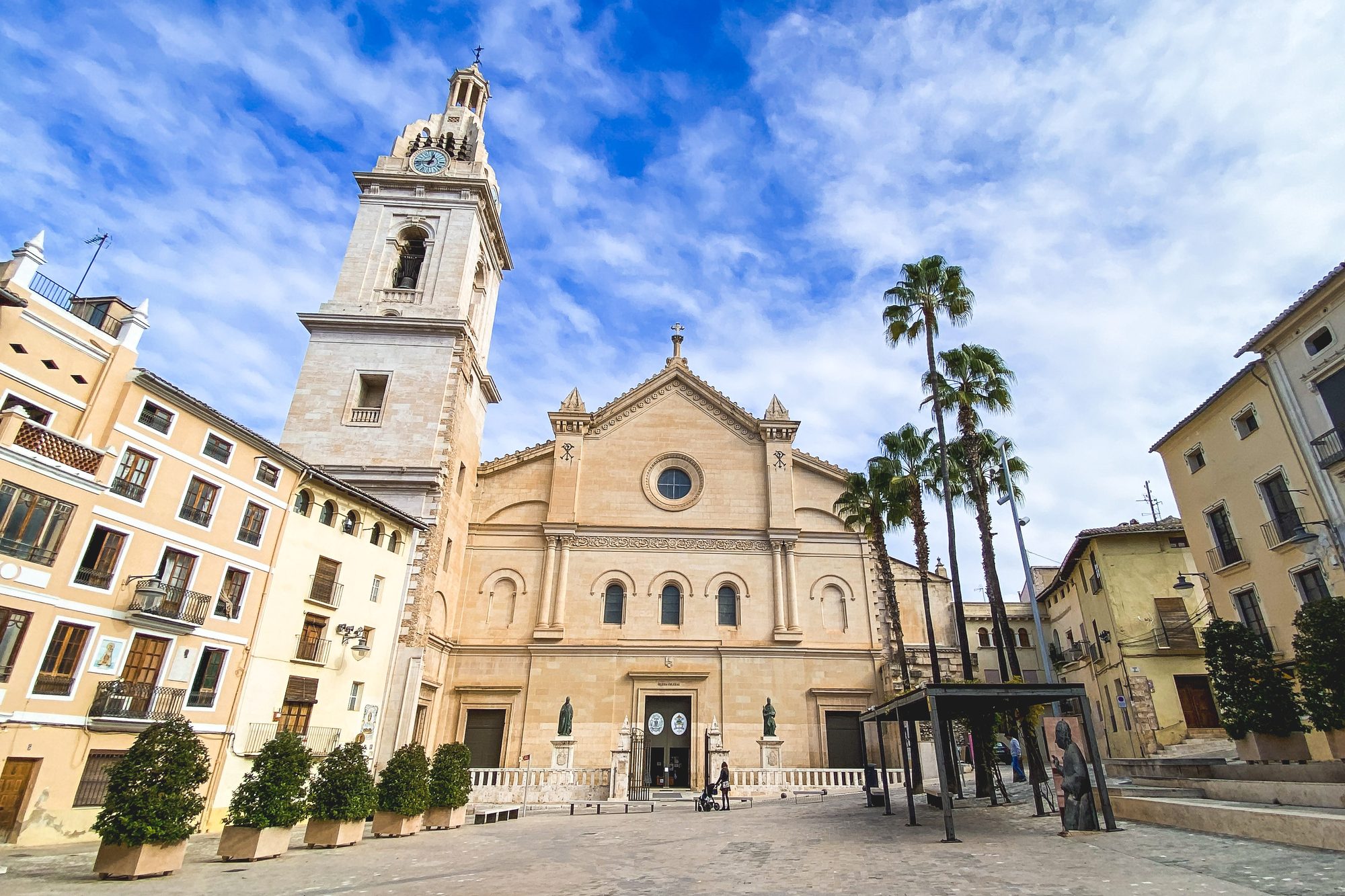
The Collegiate Church, La Seu, whose museum keeps Calixto III’s gold chalice. Photo by Alis Monte [CC BY-SA 4.0], via Connecting Valencia
Getting there: the Renfe Cercanías C2 runs direct from València Nord to Xàtiva in about 1 h, with more than 30 trains a day back to Valencia; see the Cercanías Valencia timetables (Spanish). It is the easiest car-free day trip from the city. A guided option: Medieval Xàtiva, Castle and History of the Borgias.
Peñíscola
The Knights Templar built Peñíscola Castle (Castillo de Peñíscola) on its rock in the 13th century, and in the 15th it became the papal residence of Benedicto XIII, Pedro de Luna, the “Papa Luna”. In 1414 he met King Fernando I and Vicent Ferrer in Morella to try to end the Western Schism; when they withdrew their obedience, he stayed in Peñíscola, isolated but unyielding, until his death. The castle, run by the Diputación de Castellón, crowns the old town on the rock, with beaches stretching away on either side; hours and tickets are on the official castle site. More in our Peñíscola guide.
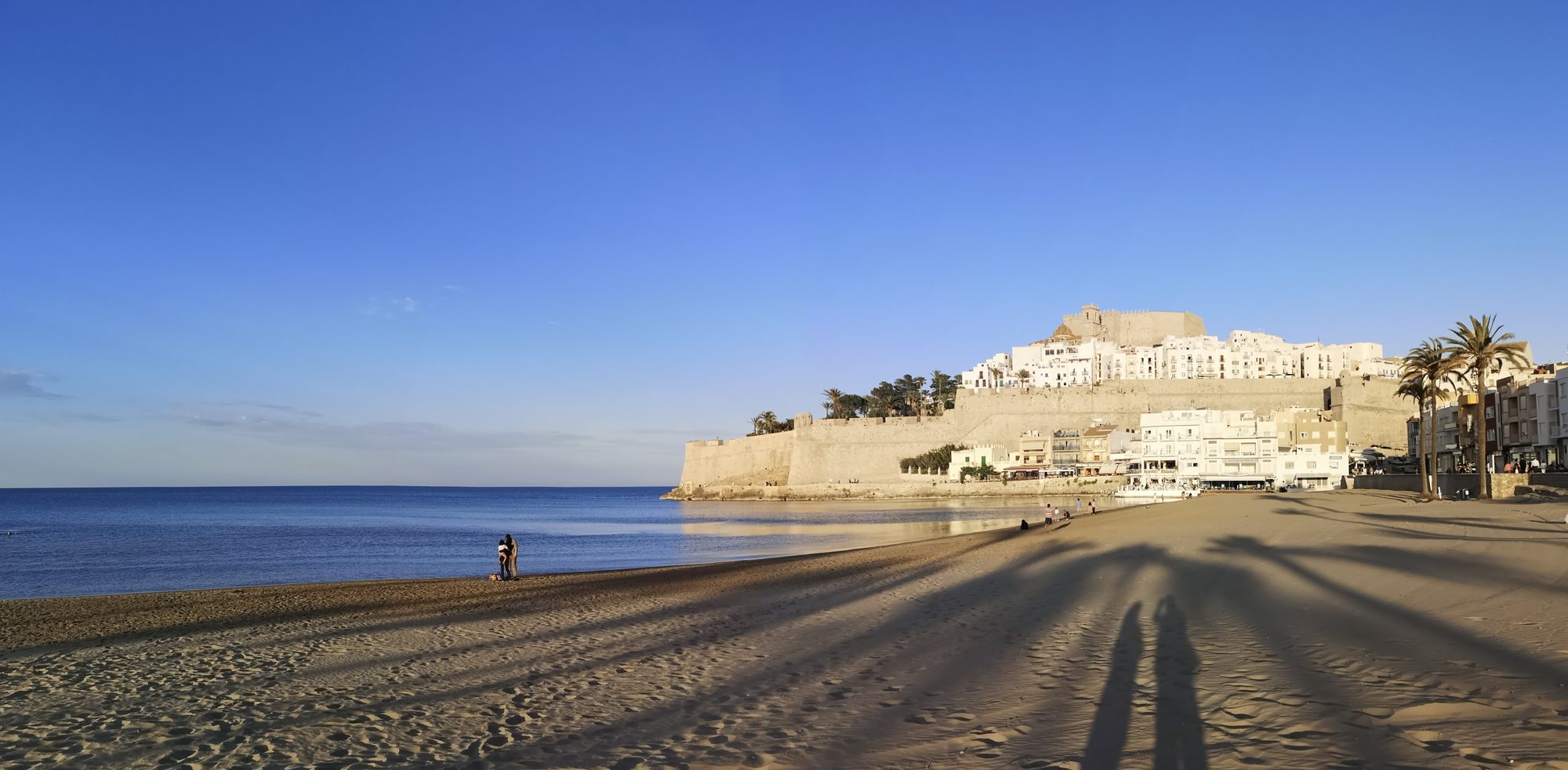
Peñíscola’s castle and old town on their promontory across the beach. Photo by Alis Monte [CC BY-SA 4.0], via Connecting Valencia
Getting there: Renfe’s Regional Exprés reaches Benicarló-Peñíscola station, which is in Benicarló, in about 1 h 30 min to 1 h 50 min. From the station, the Autos Mediterráneo bus to Peñíscola runs daily and takes about 25 minutes, more often in summer; see Autos Mediterráneo (Spanish). By car it is about 1 h 45 min. Tour option: Peñíscola Day Trip: Castle, Old Town and Beach.
Morella
Morella stands on a hill where the lands of Catalonia, Aragón and Valencia meet, on the old route between the Ebro valley and the sea. El Cid fought two battles nearby in the 11th century. Christian forces took it in 1231, and Jaume I claimed it in January 1232 from the noble Blasco de Alagón with the words that Morella was a place not for any man of the world, but for a king. It joined the Kingdom of Valencia in 1270 and sat in the Corts as the first town of the kingdom after the cities of Valencia and Xàtiva. In the 19th century it was the stronghold of the Carlist general Ramón Cabrera, the “Tiger of the Maestrazgo”.
The walls still ring the town, and a 14th-century Gothic aqueduct runs outside them. Inside, the Basilica of Santa María la Mayor (Basílica de Santa María la Mayor) is a landmark of Mediterranean Gothic, and Morella Castle (Castillo de Morella) rises above it all on its rock, with a new entrance, ticket office and toilets on calle del Hospital; hours and prices are on Morella Turística (Spanish). In winter, truffles are the local pride. Read more in our Morella guide.
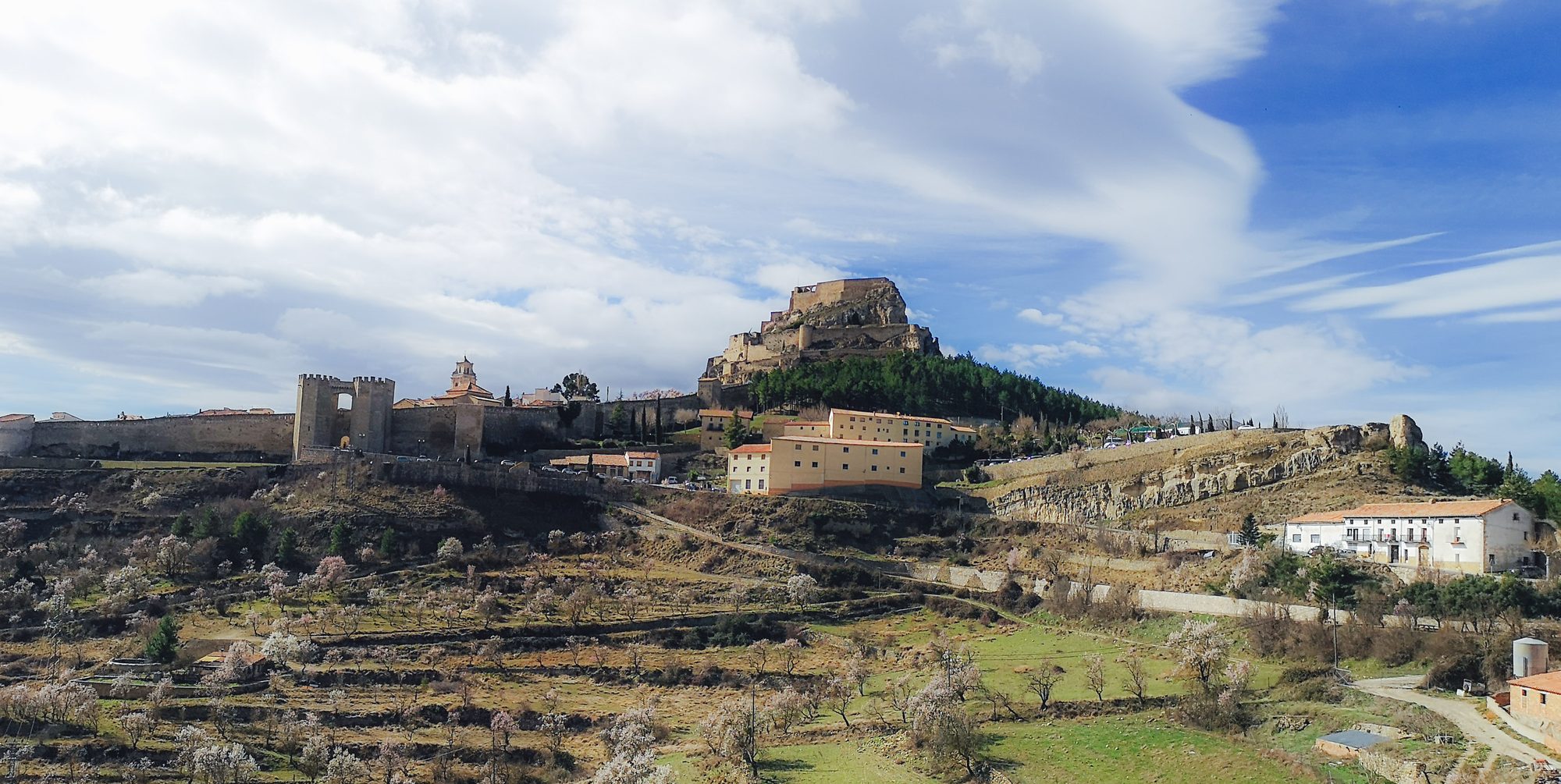
Morella’s walls and castle crag above terraces of almond blossom. Photo by Alis Monte [CC BY-SA 4.0], via Connecting Valencia
Getting there: there is no railway to Morella, and the only bus, from Castelló on weekdays, leaves barely an hour in town, so a day trip means a car (about 2 h 20 min each way, so start early) or a guided tour from Valencia. Otherwise, stay the night.
Guadalest
El Castell de Guadalest, Guadalest for short, already existed in Muslim times and kept a large Muslim population under its Catalan-Aragonese lords after the 13th-century conquest. The Cardona family became Marquises of Guadalest in 1543. The expulsion of the Moriscos in 1609 emptied the valley, and the earthquake of 22 June 1644 wrecked the castle. The reservoir below the village was built between 1953 and 1971, and the village was declared a historic-artistic ensemble in 1974. The Castle of San José (Castillo de San José) and Casa Orduña, home of the perpetual castle wardens and now the municipal museum, look out over the Guadalest Reservoir (Embalse de Guadalest) and the Xortà and Serrella ranges.
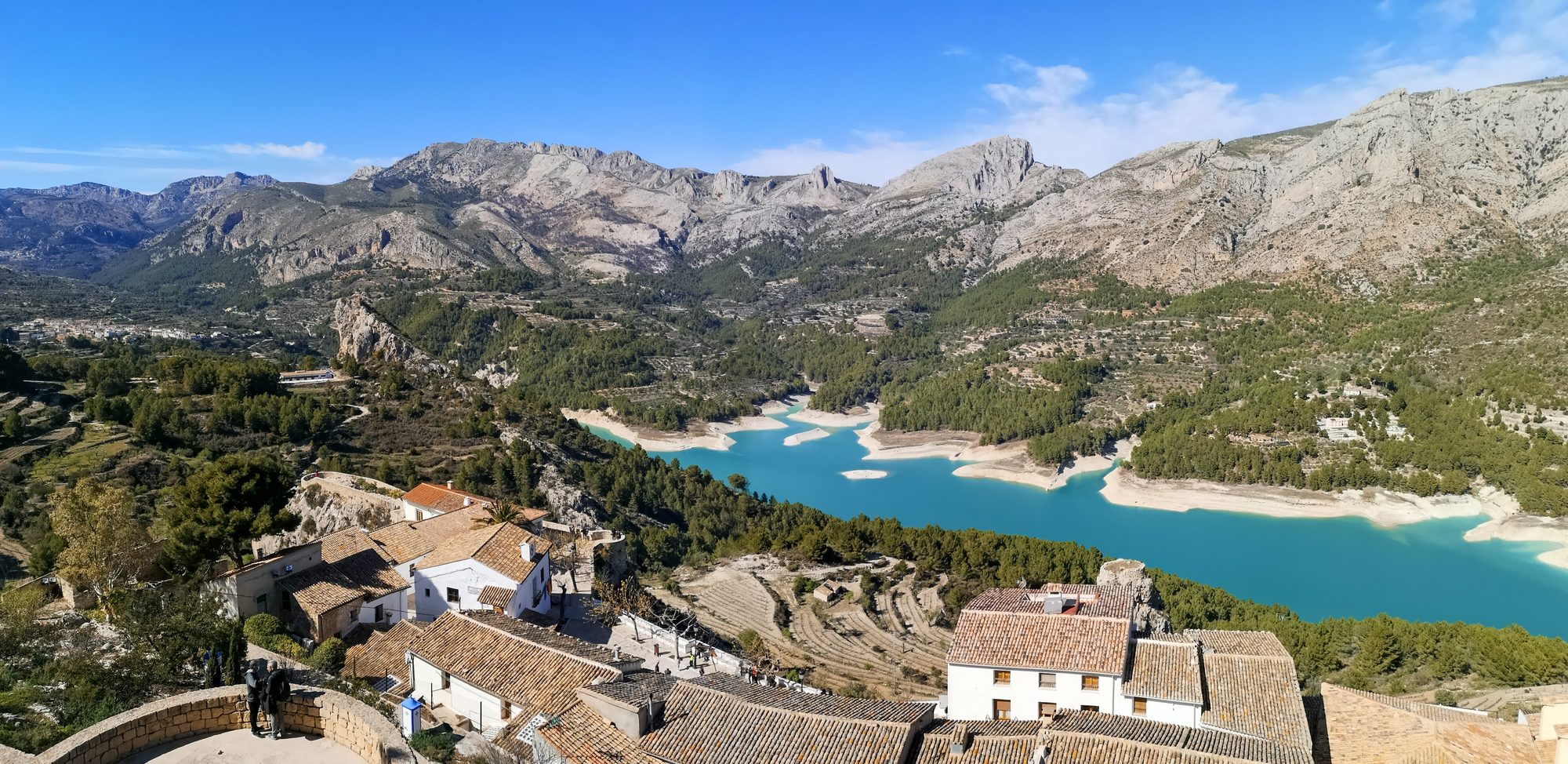
The Guadalest Reservoir below the Xortà and Serrella ranges. Photo by Alis Monte [CC BY-SA 4.0], via Connecting Valencia
Getting there: no train serves Guadalest, and the single daily bus starts in Benidorm, so from Valencia you need a car (about 1 h 45 min) or a tour. It pairs naturally with Altea, as on this tour: Guadalest, Altea and the Algar Waterfalls from Valencia. Our day trips from Benidorm cover Guadalest from the coast.
Altea
Altea is a seafaring town set in the middle of the bay that bears its name; the writer Gabriel Miró called it a “pueblo torrado al sol”, a town toasted by the sun. Its hilltop old town keeps the layout of its 1617 Renaissance fortifications, entered through the Portal Vell and the Portal Nou, and the church square stands where Altea’s castle once was. In the 1960s and 1970s painters, sculptors and musicians made it their meeting place and home. The Church of Our Lady of Consolation (Iglesia de Nuestra Señora del Consuelo), built in the early 20th century, crowns the hill with its blue-and-white glazed-tile dome, and the Glorieta del Maño looks out over the bay.
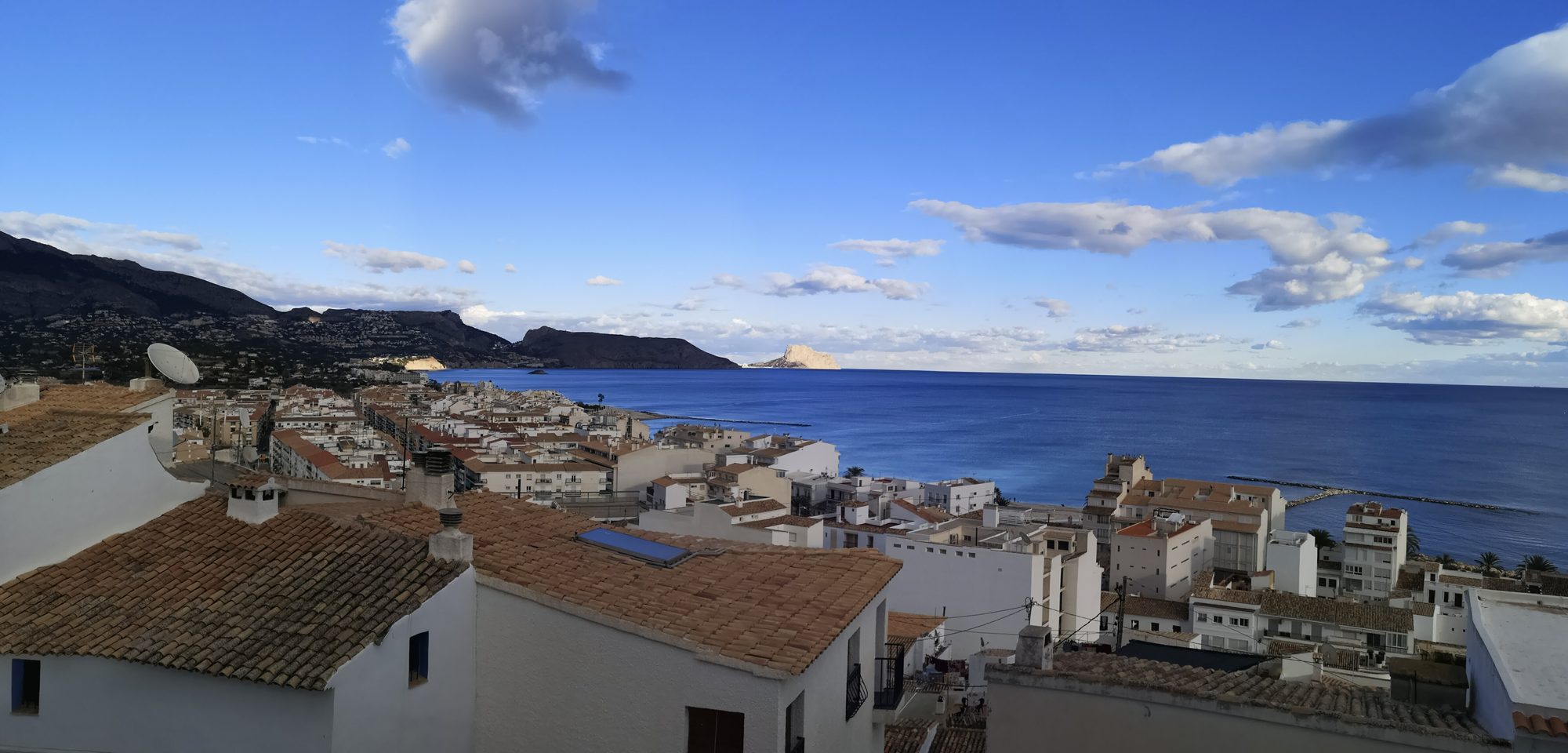
Altea’s old town climbs the hill above the bay. Photo by Alis Monte [CC BY-SA 4.0], via Connecting Valencia
Getting there: ALSA’s coastal coaches from Valencia stop in Altea, but not every service does, so check ALSA Altea–Valencia for your date. The TRAM d’Alacant Line 9 also stops at Altea, hourly from Benidorm, but reaching Benidorm by rail from Valencia takes several changes. By car it is about 1 h 40 min. Altea has no post of its own yet; it is covered with Guadalest in our day trips from Benidorm.
Calpe
Calpe (Calp in Valencian) has been lived in since the Bronze Age: remains from that age have been found on the rock, an Iberian village stood at its foot, and in Roman times a settlement flourished on the isthmus around the Baños de la Reina, a Roman villa with baths, mosaics and sea pools cut into the rock (Yacimiento Baños de la Reina). Pedro III of Aragón founded a walled town on the slopes of the rock; it was destroyed by a Castilian fleet in the War of the Two Peters, and today’s Calpe grew up in its place. Its old town keeps stretches of wall and the Torreó de la Peça; a second wall went up after a pirate attack in 1744.
Above it all rises the Peñón de Ifach (Penyal d’Ifac in Valencian), a rock joined to the land by the isthmus. A tunnel was cut through it in 1918 to reach the summit, and it became a Natural Park in 1987; check the Natural Park page (Spanish) for access before you go. Our Calpe guide and Peñón de Ifach hike cover both in detail.
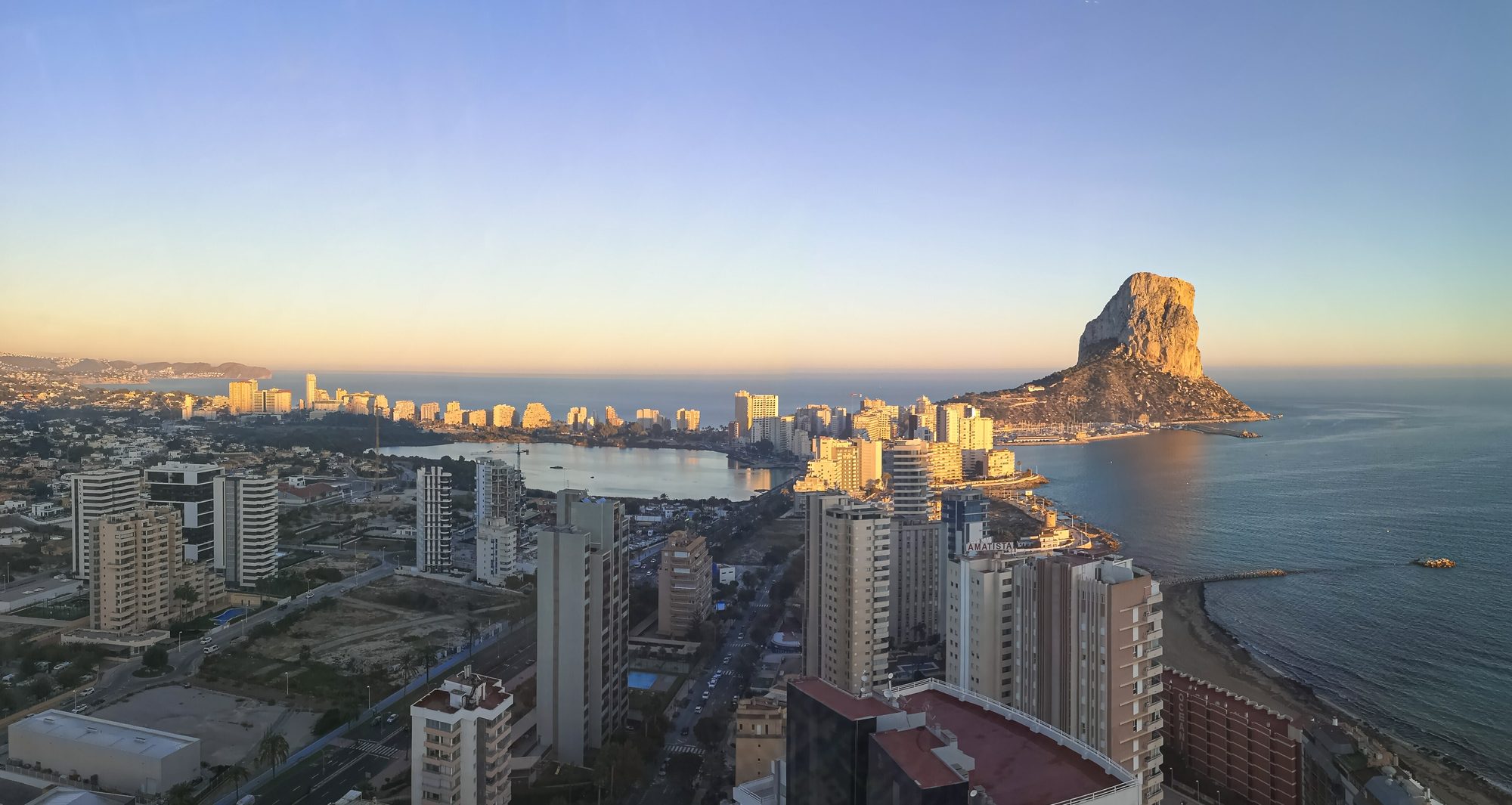
The Peñón de Ifach glows at sunset above Calpe. Photo by Alis Monte [CC BY-SA 4.0], via Connecting Valencia
Getting there: ALSA coaches on the Valencia–Jávea–Benidorm–Alicante line stop in Calpe; see the ALSA Comunitat Valenciana timetables. The TRAM Line 9 stops at Calp station, 36 minutes from Benidorm, but, as for Altea, rail from Valencia is not practical. By car it is about 1 h 30 min.
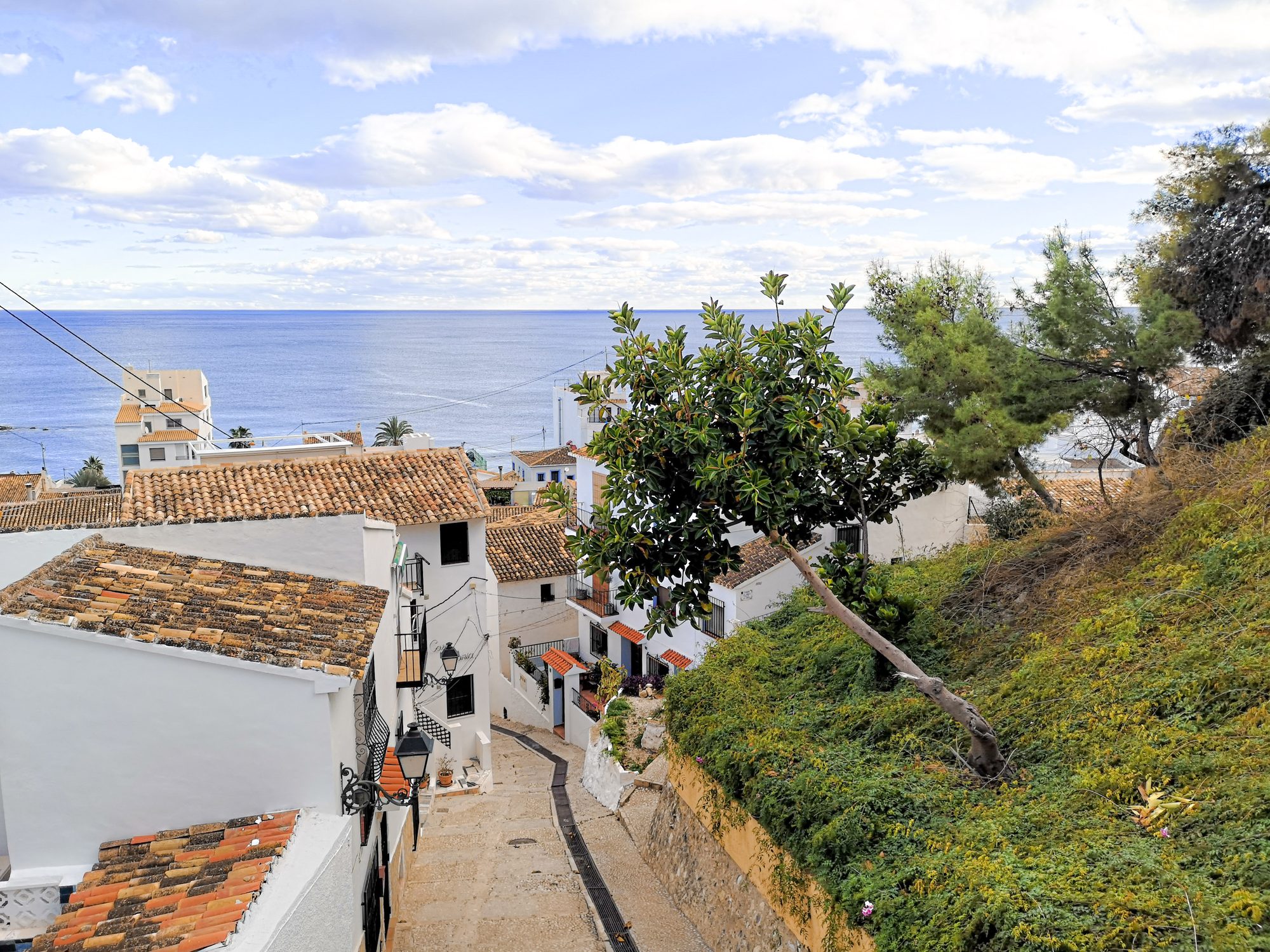
All photos by Alis Monte. If you want to collaborate, contact me on hi@connectingvalencia.com. Photo by Alis Monte [CC BY-SA 4.0], via Connecting Valencia